
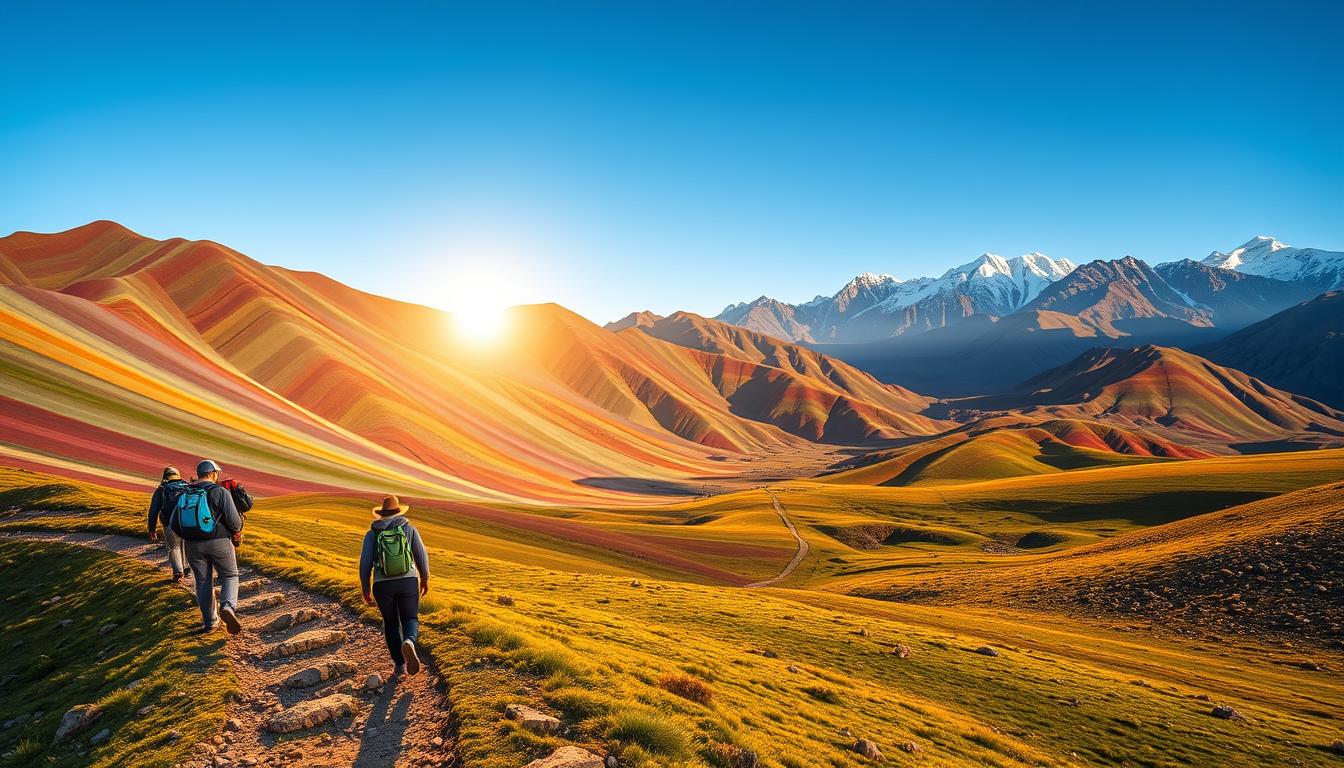
Did you know you need to trek at 16,700 feet to reach the summit? This is higher than the tallest peak in the United States. The rainbow mountain trek peru is a unique challenge.
Most people start early, around 4:00 a.m. They return to the city by 4:00 p.m. After seeing some of the most stunning Andean views.
This guide gives you a comprehensive foundation for your journey. We’ll talk about important logistics like transportation, weather, and acclimatization. While the route is accessible, careful planning is key for a safe trip.
By staying hydrated and physically prepared, you can make this high-altitude adventure comfortable and rewarding. Let us guide you to this vibrant landscape with confidence.
Key Takeaways
- The excursion typically runs from 4:00 a.m. to 4:00 p.m.
- Proper acclimatization is essential due to the 16,700-foot elevation.
- Preparation regarding weather and gear ensures a safer hike.
- This guide covers all logistics for a rainbow mountain peru from cusco trip.
- Respecting local cultural etiquette enhances the overall travel experience.
Introduction to Rainbow Mountain
In the Andes, a natural wonder awaits those who explore beyond Cusco. Known as Vinicunca, it has amazed travelers with its colorful slopes. The rainbow mountain hike peru offers a rare look at nature’s power.
What Is Rainbow Mountain?
Also called the Montaña de Siete Colores, or Mountain of Seven Colors, it was hidden under ice for centuries. In 2015, melting snow revealed its colorful layers. These colors come from minerals compressed over millions of years.
The mountain changes with the sun and weather. Sunlight affects how we see its colors, making each visit unique.
“To stand before the painted slopes of Vinicunca is to witness the earth revealing its hidden history, one vibrant layer at a time.”
Why Is It a Must-Visit?
The area is not just beautiful but also offers a sense of scale. The rainbow mountain hike peru shows stunning views of the Ausangate Massif. It’s a mix of nature and culture that travelers love.
The table below shows how different things affect the mountain’s look:
| Factor | Impact on Appearance | Visitor Tip |
|---|---|---|
| Sunlight | High intensity/Vivid colors | Visit during mid-morning |
| Cloud Cover | Soft, muted tones | Expect lower contrast |
| Recent Rain | Deepened, saturated hues | Trails may be slippery |
| Time of Day | Changing shadows | Early arrival is best |
Choosing the rainbow mountain hike peru is a deep connection with nature. It’s perfect for photography or nature lovers. The vast landscape makes it unforgettable.
Getting to Cusco
Your journey to Rainbow Mountain starts in Cusco. This city is a key hub for exploring high altitudes. It has everything you need for your rainbow mountain trek peru adventure.
Most trips start early, around 4:00 a.m. This helps you reach the trailhead before the weather gets worse.
Preparing for Your Trip
Getting to the South Valley needs careful planning. The drive to the trailhead takes about three hours. Make sure you’re comfortable and reliable in your plans. Preparation is the key to a stress-free journey in the Andes.
Before you leave, check these important details:
- Confirm your pickup time and location with your transport provider.
- Verify that your payment methods are accepted for local services.
- Establish a clear plan for return logistics to avoid delays.
- Keep emergency contact information accessible at all times.
Recommended Travel Arrangements
Travelers often choose between tours and independent travel for the rainbow mountain trek peru. Tours are convenient because they handle the drive and other logistics. They usually include guides, oxygen, and meals.
If you prefer to travel alone, you’ll need to make several connections. A local colectivo from Cusco to Checacupe costs about 7–8 soles. Then, a taxi to the trailhead will cost between 100 and 120 soles.
| Travel Method | Convenience Level | Estimated Cost |
|---|---|---|
| Organized Tour | High | Varies by provider |
| Independent (Colectivo/Taxi) | Low | ~130 Soles |
Choose your travel method wisely. Always prioritize safety by confirming your plans early. Whether you travel with a group or alone, a solid plan lets you enjoy the views without worrying about the journey.
Understanding Rainbow Mountain’s Geography
To truly appreciate the journey, one must first grasp the unique geological forces that shaped this region. The rainbow mountain hike peru is not just a walk through the Andes. It’s a passage through millions of years of natural history. Knowing the terrain helps travelers prepare for the physical demands of this high-altitude environment.
The Unique Colors of the Mountain
The mountain’s famous striped appearance comes from complex mineral-rich geological layers pushed up by tectonic activity. Over time, weathering and erosion exposed these distinct bands of sediment. Each color shows a different mineral composition:
- Iron oxide creates the vibrant red and rust tones.
- Chlorite contributes to the deep green shades.
- Sulfur is responsible for the bright yellow streaks.
The colors may appear more or less intense depending on the weather. On a clear, sunny day, the contrast is sharp and vivid. During cloudy or rainy conditions, the colors often appear more muted, which is a natural aspect of the rainbow mountain hike peru experience.
Elevation and Altitude Considerations
The geography of this region presents a significant challenge due to extreme elevation. The route typically begins near the village of Cusipata at approximately 3,310 meters above sea level. From there, the trail climbs steadily to reach an altitude of roughly 5,100 meters, with some viewpoints extending toward 5,200 meters.
This altitude is substantially higher than that of Cusco, and it can affect visitors in several ways. Common symptoms of altitude exposure include:
- Mild headaches or dizziness
- Shortness of breath during exertion
- General fatigue or nausea
While some level of breathlessness is normal during a rainbow mountain hike peru, travelers should remain vigilant. If you experience severe symptoms such as persistent vomiting, confusion, or extreme chest pressure, you must descend immediately. Listening to your body is the most effective way to ensure a safe and rewarding visit to this majestic landscape.
Choosing the Right Tour
Choosing the right tour is key when planning your trip to the Andes. The terrain is tough, so your comfort and safety depend on the tour operator. A good rainbow mountain trek peru tour lets you enjoy the views without worrying about the details.
Types of Tours Available
There are three main types of tours: shared group tours, private departures, and independent travel. Shared group tours are popular because they’re affordable and social. They follow a set schedule and offer a fun group vibe.
Private tours give you more flexibility and a pace that suits you. They’re great for families or small groups. Independent travel, on the other hand, requires a lot of planning. You’ll need to arrange your own transport and permits. It offers freedom but lacks the safety of a professional guide.
What’s Included in a Tour?
Good tour operators include important services to make your trip smooth. You’ll usually get round-trip transport from Cusco, entrance fees, breakfast, and lunch. Expect a guide who speaks both languages, basic first aid, and emergency oxygen.
But, some things are not included in the basic price. You might need to pay extra for water, insurance, and tips. If you want a horse for the climb, that’s an extra cost too.
| Tour Type | Flexibility | Cost | Support Level |
|---|---|---|---|
| Shared Group | Low | Budget-Friendly | Standard |
| Private Tour | High | Premium | High |
| Independent | Very High | Variable | Minimal |
Before you book, check the company’s credentials and medical support. Look at the group size, vehicle quality, and refund policies. Doing this ensures your rainbow mountain trek peru is safe and unforgettable.
Best Time to Visit Rainbow Mountain
Planning the perfect time to see the colorful slopes of the Andes can make your trip unforgettable. The rainbow mountain hike peru is a dream for many, but the high altitude needs careful planning. This includes knowing the best seasons and times of day.
Weather Patterns to Consider
The Andean weather is unpredictable, changing quickly from sunny to misty. Remember, Cusco’s rain doesn’t always mean the same at the mountain top. There, you might face snow or cold winds without warning.
For accurate forecasts, check local mountain reports, not just city weather. Even in the dry season, be ready for sudden cold and altitude sickness.
“The mountains have a way of dictating their own schedule, and the wise traveler learns to respect the changing moods of the high Andes.”
Peak Tourist Seasons
To enjoy the rainbow mountain hike peru fully, timing your trip is key. Most tours leave Cusco between 4:00 a.m. and 5:00 a.m. This helps avoid the crowds that come later.
Those traveling alone might leave at 8:00 a.m. or 9:00 a.m. But they might run into big groups coming back. Starting early usually means better views and a quieter experience for photos.
| Season | Weather Conditions | Crowd Levels | Visibility |
|---|---|---|---|
| Dry (May–Sept) | Clear, Cold, Sunny | High | Excellent |
| Shoulder (Oct–Nov) | Variable, Mild | Moderate | Good |
| Wet (Dec–April) | Rainy, Cloudy, Snow | Low | Limited |
No season is perfect for the rainbow mountain hike peru. But, an early start increases your chances of seeing the mountain’s colors at their best.
Preparing for the Hike
Going on a high-altitude adventure needs more than just excitement. You must prepare physically and logistically. The environment is tough and can change quickly. So, organizing your gear and checking your fitness will make your rainbow mountain trek peru better.
Essential Packing List
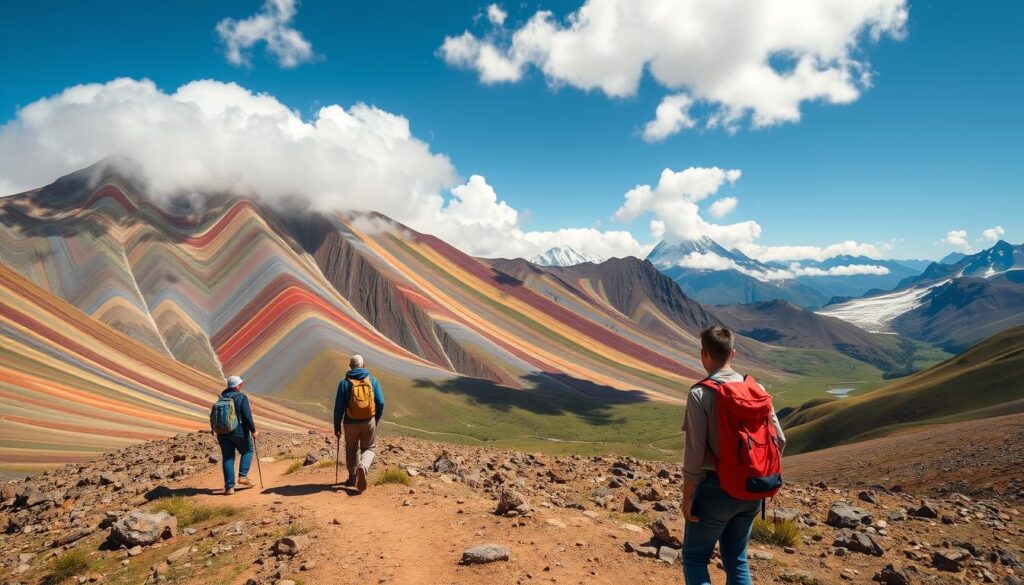
Packing right is key for dealing with the weather at high places. You should wear layered clothing to stay comfortable as the temperature changes.
- Sturdy hiking shoes: Make sure they fit well to avoid blisters.
- Waterproof protection: A good rain jacket or poncho is a must for mountain rain.
- Sun protection: The sun at high altitudes is strong; bring sunscreen, sunglasses, and a hat.
- Personal items: Bring your own water, snacks, and any needed medicines.
- Tech and warmth: Pack a portable battery for your devices and warm gloves for the cold summit.
Always carry your prescriptions in their original packaging. Don’t count on your tour operator for all your water. Bringing a reusable bottle is a smart move.
Physical Fitness Considerations
The rainbow mountain trek peru is tough because of the high altitude. You don’t need to be an elite athlete, but some fitness is helpful.
The last 800 meters are very hard, with steep trails and thin air. Walking or light cardio before your trip can boost your confidence.
If the climb is too hard, some local operators offer horse assistance. Remember, this is for support, not a replacement for acclimatization or medical checks if you’re not feeling well.
The Hiking Experience
Every step on the rainbow mountain hike peru brings you closer to a South American wonder. It’s not just a walk; it’s a dive into the Andes’ rugged beauty. The effort is worth it for the stunning mountain views.
What to Expect on the Trail
The hike starts near Cusipata, with a gentle slope. You’ll walk by a mountain stream, adding to the hike’s beauty. Most hikers take about two hours to climb, but it depends on your acclimatization and the weather.
The descent is faster, about 1.5 hours. But always prioritize safety over speed. At the summit, you get 30 minutes to take in the views and photos without rush.
Highlights Along the Way
The trail is full of visual treats. You’ll see graceful alpacas and llamas against the mountains. These animals are friendly, perfect for nature photos.
The trail also offers stunning views of Ausangate mountain. The snow-capped peaks against the colorful slopes are breathtaking. This hike is a must for those who love the Peruvian highlands.
| Feature | Details |
|---|---|
| Average Ascent Time | 2 Hours |
| Average Descent Time | 1.5 Hours |
| Summit Duration | 30 Minutes |
| Key Wildlife | Alpacas and Llamas |
Tips for a Successful Visit
Before you start your rainbow mountain trek peru, make sure you’re physically ready. This is the best way to have a great time. Follow expert advice to handle the high altitude safely.
Acclimatization Strategies
Getting used to high altitudes is key. Spend at least two to three days in Cusco before hiking. This helps your body adjust to the thinner air.
When you start your rainbow mountain trek peru, walk slowly. Take frequent rest stops to keep your heart rate down. Always listen to your body; if you feel too tired, stop and rest.
Staying Hydrated and Energized
Good food and water are important at high elevations. Drink lots of water, even if you’re not thirsty. Eat light meals and avoid alcohol before your trip.
Many tours offer oxygen and first aid. But these are for emergencies, not a substitute for medical care. Make sure you have travel insurance that covers high-altitude activities. If you get worse, tell your guide right away so they can help you get to a lower place.
- Stay hydrated with water or coca tea.
- Eat light, energy-dense snacks like nuts or dried fruit.
- Avoid heavy, greasy meals that slow down digestion.
- Communicate openly with your guide about your physical state.
Cultural Insights
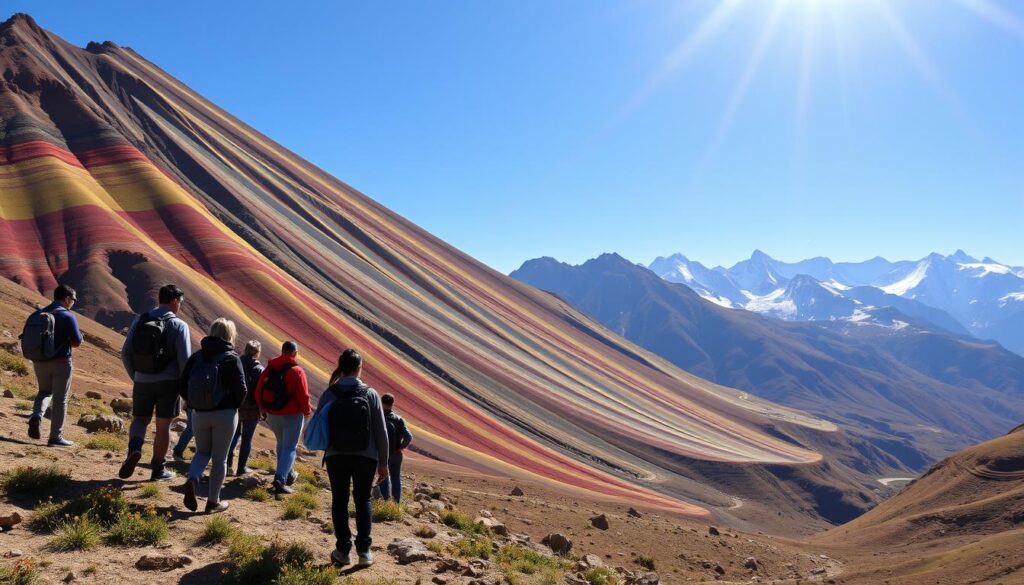
The area around the mountain is home to vibrant Andean communities. These people are not just part of the scenery. They are the guardians of a landscape that has supported their families for generations.
When you start your rainbow mountain hike peru, you step into a world where ancient traditions are alive. This journey becomes more than just a hike. It becomes a chance to connect with the culture.
Local Communities and Their Traditions
Traveling through Cusipata, you’ll meet families who keep traditional ways of life. Many of them farm and raise alpacas and llamas. These animals are key to the Andean highlands.
These animals are important for the local economy and culture. You might see locals wearing colorful, handmade textiles. These show their heritage and artistic skills passed down through time.
Respecting Indigenous Cultures
It’s important to respect these communities and the environment. Always ask for permission before taking photos of people or animals. This shows you value their privacy and space.
Helping the local economy is another way to travel responsibly. Buying authentic, local handicrafts from community members helps their families. It’s a way to support them directly.
Also, stay on marked paths during your rainbow mountain hike peru. This protects the delicate alpine ecosystem. By doing this, you help ensure the land stays healthy for the future. Simple actions like these make a big difference.
Photography and Memories
Capturing the beauty of the Andes is more than just taking pictures. It takes patience and preparation. On the rainbow mountain hike peru, you’ll see gold, lavender, red, and turquoise layers. It’s hard to capture the full beauty in one photo, but it’s worth the effort.
Capturing the Perfect Shot
High-altitude places can be tough on cameras. The cold can drain batteries quickly. So, always carry spare batteries and a power bank. Keep your camera safe from cold to avoid damage.
To show the mountain’s size, include a person or landmark in your photo. This gives a sense of scale. Always stay on paths to protect the environment. If you want to take photos of locals or animals, always ask for permission first.
Best Times of Day for Photography
The light changes a lot at high elevations. Morning light is best because it softens shadows and highlights the mountains. It also avoids the flat light of midday.
Broken clouds can add to your photos. They create interesting shadows on the mountains. Waiting for the right light during the rainbow mountain hike peru is worth it.
| Equipment | Purpose | Pro Tip |
|---|---|---|
| Spare Batteries | Power backup | Keep warm in pockets |
| Wide-angle Lens | Landscape scale | Use for panoramic shots |
| Polarizing Filter | Reduce glare | Enhance color saturation |
| Power Bank | Charging devices | Ensure full charge before hike |
Conclusion: Is the Trip Worth It?
Visiting the Andes is a big decision that needs careful thought. A rainbow mountain trek peru offers great rewards for those who prepare well and have the right expectations.
Reflecting on the High-Altitude Journey
Success at high altitudes depends on your dedication to acclimatization and physical fitness. Travelers who respect the 5,100-meter altitude and stay hydrated find it rewarding. This journey tests your endurance, not just your sightseeing skills.
Embracing Your Andean Adventure
Choosing the right itinerary for your rainbow mountain peru from cusco trip is key. Good guides, quality gear, and travel insurance give you the confidence to face changing weather. Pick a path that matches your fitness level to make your time in the mountains unforgettable.