
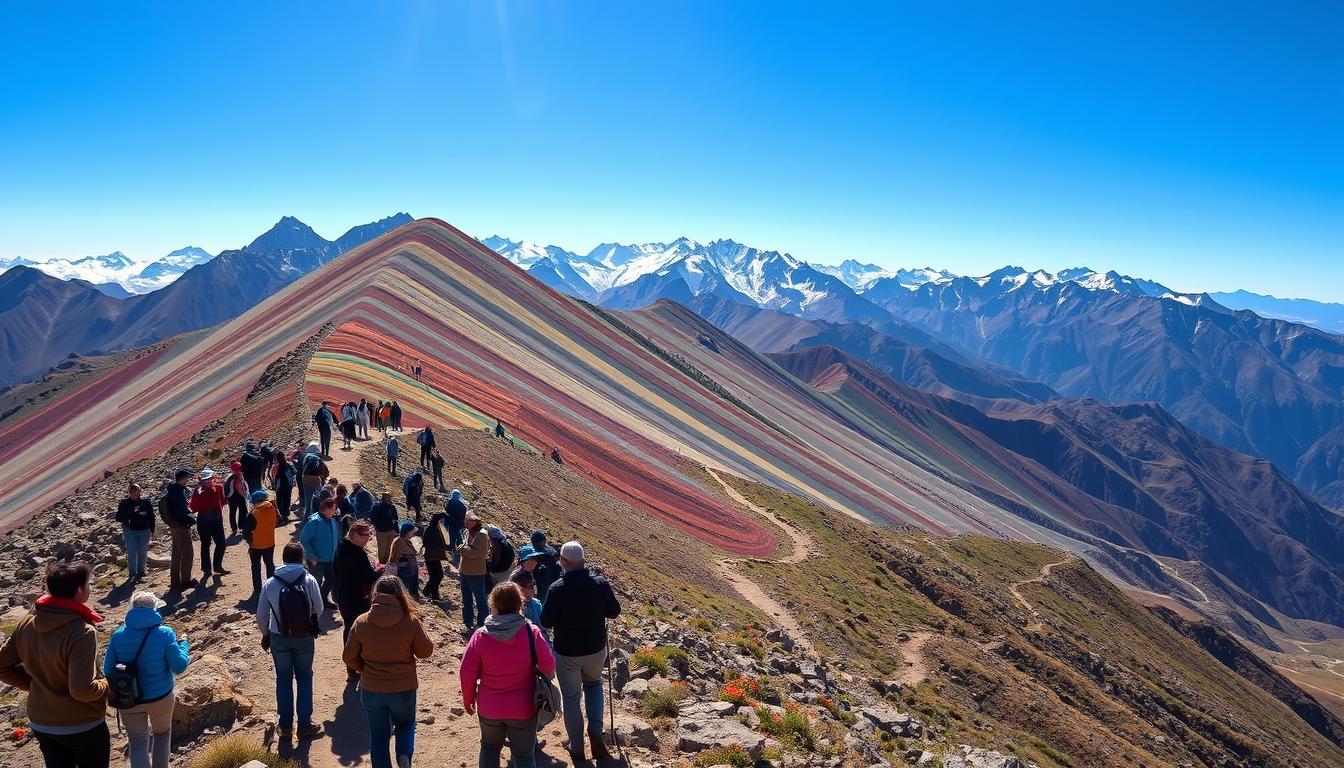
Did you know the summit of Vinicunca is 17,060 feet above sea level? This place is much higher than most Andes tourist spots. High-altitude hiking in Peru is a big challenge that needs careful planning.
Because Vinicunca’s altitude is so high, travelers must acclimatize well. This is key to a safe and fun trip. Knowing the physical demands of this place is the first step to success.
This guide offers important health tips for exploring this colorful wonder. We’ll talk about acclimatization, packing, and choosing tours. By using these expert tips, you can enjoy your adventure to the colorful peaks with confidence and comfort.
Key Takeaways
- The summit reaches 17,060 feet, requiring visitors to acclimate in Cusco for several days beforehand.
- Proper hydration and layered clothing are critical for managing the rapid temperature changes at high levels.
- Physical exertion feels much more intense due to the thin air, so pacing yourself is essential.
- Choosing the right tour operator ensures you have access to oxygen and professional safety support.
- The best time to visit is between March and September for clearer skies and safer trail conditions.
Understanding Rainbow Mountain’s Elevation
Before you start your hike, it’s key to understand the high-altitude terrain in the Peruvian Andes. The rainbow mountains peru elevation is not just about being fit. It’s about respecting the environment. With the right preparation, a tough trek can become a fulfilling adventure.
What is Rainbow Mountain’s Exact Altitude?
The Vinicunca elevation is an impressive 17,060 feet (5,200 meters) above sea level. For comparison, Cusco is about 11,150 feet, and Puno is near 12,500 feet. The altitude of rainbow mountain peru is much higher. Your body will feel the difference right away.
Knowing the Rainbow Mountain height is important for planning. Most people spend days at lower altitudes before climbing. This helps their bodies adjust to the thinner air at such high elevations.
Why Elevation Matters for Hiking
The air at these heights has less oxygen than at sea level. This makes even a short trail feel considerably more demanding. You might breathe faster or feel tired sooner than usual.
Some people might get headaches or nausea, but it’s not a must. The secret to success is gradual pacing. Focus on taking breaks and acclimatizing slowly. This helps manage the physical challenges of the climb.
The Geography of Peru’s Rainbow Mountains
The famous Vinicunca is in the Andes’ heart. It’s part of the Vilcanota Mountain Range. This area has rugged peaks and high elevations. Knowing the rainbow mountains altitude is key for travelers.
The thin air and harsh climate help keep these natural wonders intact.
The Formation of Rainbow Mountain
The colors on the slopes aren’t from paint. They come from millions of years of tectonic movement and mineral buildup. Over time, these layers compressed, showing the colors we see today.
Each color shows a different mineral. Erosion has exposed these minerals:
- Red and pink: From iron oxide or clay minerals.
- Yellow and gold: From iron sulfide or sulfur-rich minerals.
- Green and turquoise: From chlorite or magnesium-rich rocks.
- White: Indicates quartz or limestone deposits.
Nearby Landmarks Worth Visiting
While the main peak is famous, the area has other stunning spots. These places are great for those seeking less crowded routes.
Don’t miss these:
- Ausangate: A sacred mountain with a breathtaking view.
- Palcoyo Mountain: Offers three striped peaks and a stone forest.
- The Red Valley: Has dramatic, rust-colored landscapes.
Visiting Palcoyo Mountain is a great alternative. It has similar wonders but is easier to reach. These sites show the power of nature in the Peruvian Andes.
Acclimatization: Preparing for the Altitude
Getting used to high altitudes is key for a great trek in the Andes. When you come from low places, your body needs time to adjust to less oxygen. Getting ready helps avoid discomfort and lets you enjoy the views.
The Importance of Acclimatization
The altitude rainbow mountain peru is a big challenge because it’s very high. Climbing too fast can make your body struggle with less oxygen, causing sickness. It’s important to take your time to adjust safely.
By letting your body adjust, you’re more likely to have a good trip. Putting your health first in the early days means you can enjoy the journey. Good Rainbow Mountain acclimatization makes your trip a great memory.
Tips for Effective Acclimatization
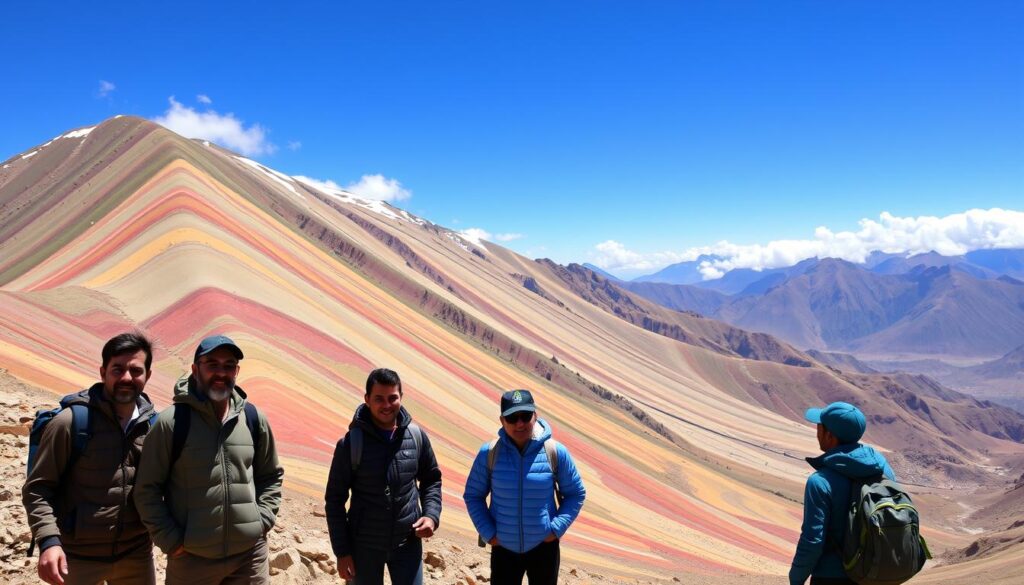
The best way to adjust to Cusco altitude is to spend 2-3 days in the city before hiking. Keep your activity level low to save energy. Rest well and drink lots of water.
Drinking coca leaf tea is a common practice for altitude sickness prevention. But remember, it’s just a mild help and not a replacement for medical care. If you’re thinking about taking Diamox, talk to a doctor first.
| Strategy | Action Required | Benefit |
|---|---|---|
| Gradual Ascent | Spend 2-3 days in Cusco | Allows natural adjustment |
| Hydration | Drink plenty of water | Supports oxygen circulation |
| Medical Advice | Consult a doctor for Diamox | Proactive symptom management |
| Rest | Avoid heavy exercise | Reduces physical strain |
Listening to your body is the most important thing. If you feel bad, rest or go down to a lower place. Following these tips for altitude rainbow mountain peru keeps you safe while you explore the Andes.
Essential Hiking Tips for Rainbow Mountain
Hiking in the Andes requires physical strength and the right gear. The rainbow mountain peru altitude can affect your body differently. It’s important to be ready for changing weather to have a successful trip.
What to Pack for Your Hike
Choosing what to wear to Rainbow Mountain is key. Use a layering system to adjust to temperature changes. This way, you can add or remove clothes as needed.
- Base layers: Moisture-wicking fabrics to keep you dry.
- Insulation: A fleece or down jacket for warmth.
- Outer shell: A waterproof and windproof jacket to handle sudden mountain storms.
- Footwear: Sturdy, waterproof hiking boots with good ankle support.
Don’t forget to pack essential items for comfort and safety. Bring a warm hat and gloves for the summit’s wind. Sun protection is also vital; pack sunscreen and polarized sunglasses. Carry water, snacks, and a first-aid kit for minor issues.
Best Time to Visit Rainbow Mountain
Choosing the right season is key for clear views. The best time to visit Rainbow Mountain is March to September. These months have more stable weather and better visibility.
July and August are sunny but crowded. No matter when you go, be flexible. Andean weather is unpredictable, so be ready for rain, snow, or clouds at any time.
The Hiking Experience Explained
The trek to Vinicunca is a journey that tests even the most experienced hikers. Many plan a Rainbow Mountain day trip from Cusco. But, it’s important to know it’s more than just a walk. Knowing the terrain and physical demands is key to a successful visit.
What to Expect on the Trail
The adventure starts at the trailhead, where you’ll see a beautiful valley. The Vinicunca hike distance is about 4 to 5 miles round-trip. The path is well-marked but can be rocky and uneven.
As you get closer to the top, the climb gets steeper. But the view from the summit is worth it. You’ll see a colorful ridge and the snow-capped Ausangate mountain.
| Trail Segment | Terrain Type | Physical Effort |
|---|---|---|
| Initial Valley | Flat/Gradual | Low to Moderate |
| Mid-Section | Rocky/Uneven | Moderate |
| Final Ascent | Steep/Incline | High |
Difficulties You May Encounter
The main challenge is the altitude of rainbow mountain peru. Even fit people find it hard to breathe at high altitudes. It’s important to pace yourself.
The Rainbow Mountain trail difficulty is due to steep climbs and thin air. Some offer horse rentals, but check the animal welfare first. Preparation and patience are your best friends on this journey.
“The mountains are calling and I must go, but one must always respect the power of the high Andes to truly appreciate their beauty.”
The hike is a test of endurance that pays off with stunning views. Stay hydrated and keep a steady pace. This way, you can enjoy the unique beauty of the region.
Local Culture and Environment
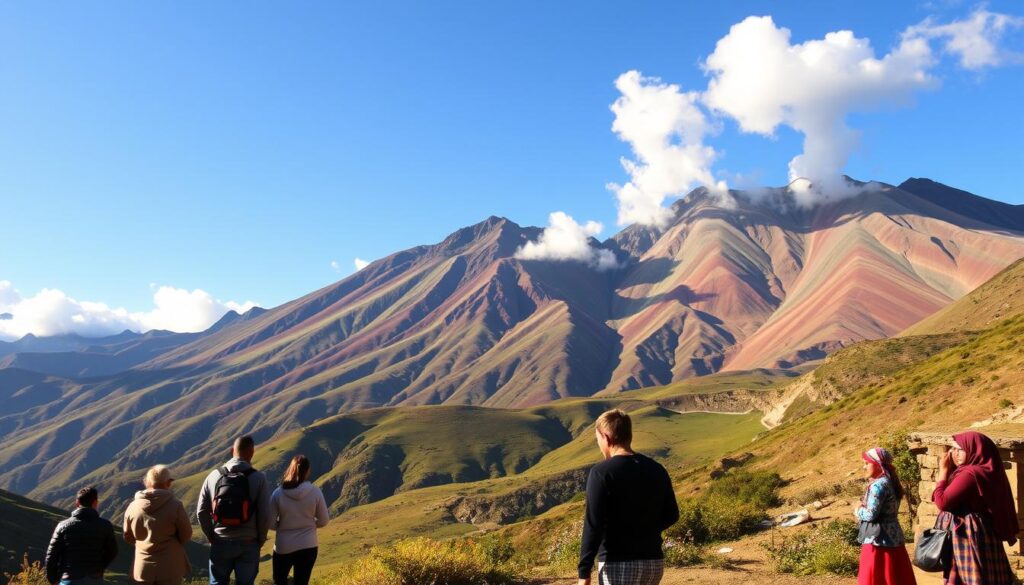
The area around the rainbow mountains altitude is full of life and color. It’s not just a place for tourists; it’s a living world. The people who live here work hard to keep it alive. Visitors need to understand this connection.
Interactions with Local Communities
The Andean communities here live off the land. They farm and raise alpacas. These families take care of the land and their traditions. Visitors should respect them by traveling responsibly.
Here are some tips for respectful visits:
- Always ask before taking pictures of people or animals.
- Buy local crafts to support the community.
- Be quiet and respectful of their culture.
“The mountains are not just scenery; they are the heart of our culture and the source of our livelihood.”
Protecting the Rainbow Mountain Ecosystem
Everyone who visits must help protect the Rainbow Mountain. The soil is delicate and can easily be damaged. Stay on the paths to avoid harming the land.
To leave a small footprint, follow these tips:
- Carry out all waste: Don’t leave trash behind.
- Reduce plastics: Use a refillable water bottle.
- Choose alternatives: Visit other sites like Palcoyo to spread out tourism.
Visiting with care helps keep the Andes beautiful for the future. Small, conscious actions by travelers make a big difference.
Essential Safety Tips
When planning a high-altitude trek in the Andes, your safety is key. Knowing what to expect at Rainbow Mountain helps you stay safe and enjoy the views. Being prepared and aware is the best way to have a safe and memorable trip.
Recognizing and Responding to Altitude Sickness
Visiting altitude rainbow mountain peru can be tough for your body. You might feel headaches, nausea, dizziness, and shortness of breath. If you notice these signs, listen to your body right away.
Don’t try to ignore getting sicker to see the view. If your symptoms get worse, tell your guide or friend. Resting and descending to a lower place is the best way to feel better and avoid serious health problems.
Staying Hydrated and Nourished
It’s important to stay hydrated at high altitudes. Drink lots of safe, bottled water during your hike, even if you’re not thirsty. Dehydration can make thin air effects worse.
Eat small, frequent meals that are high in carbs to keep your energy up. Avoid heavy, greasy foods before or during your hike. If you have heart, lung, or altitude concerns, see a doctor before you go.
| Symptom Level | Common Signs | Recommended Action |
|---|---|---|
| Mild | Headache, fatigue | Rest, hydrate, monitor |
| Moderate | Nausea, dizziness | Stop, inform guide, descend |
| Severe | Confusion, chest pain | Immediate medical evacuation |
Guided Tours vs. Solo Hiking
Planning a trip to these colorful peaks means choosing between a tour and solo hiking. Your choice affects how you handle the rainbow mountain peru altitude and the trip’s logistics. Both options offer unique experiences based on your comfort and travel goals.
Benefits of Choosing a Guided Tour
A guided Rainbow Mountain tour is great for those seeking ease. Guides take care of Rainbow Mountain transportation, getting you to the trailhead safely and on time. This saves you from dealing with local transit early in the morning.
Guides also support your health. They know how to spot altitude sickness and help you pace. Plus, they speak the local language, making communication and emergencies easier.
Advantages of Going Solo
Going solo on a solo Rainbow Mountain hike gives you freedom. You can set your pace, take photos, and avoid group schedules. This lets you connect more deeply with the landscape.
But solo hiking means you must prepare well. You need to arrange Rainbow Mountain transportation yourself and have a clear plan. It’s also key to have a solid safety plan, as you’re responsible for your health at high altitudes.
| Feature | Guided Tour | Solo Hike |
|---|---|---|
| Logistics | Fully Managed | Self-Arranged |
| Safety | Professional Support | Personal Responsibility |
| Flexibility | Fixed Schedule | High Autonomy |
If you’re new to high altitudes or have health concerns, a guided Rainbow Mountain tour is safer. But if you’re experienced, a solo Rainbow Mountain hike might be more fulfilling. Always put your safety and health first when planning your trip.
Conclusion: Your Journey Awaits!
Reaching the summit of Vinicunca at 5,200 meters is a big achievement. Good planning makes this tough climb safe and rewarding.
Embracing the Adventure
Respecting the Andean environment is key for a successful high-altitude adventure in Peru. Spend time in Cusco to get used to the altitude before climbing. Walk slowly and watch for signs of altitude sickness.
Bring layers for the mountain’s changing weather. Stay hydrated and eat light, healthy meals to keep your energy up. These steps help ensure a great experience.
Final Thoughts on Visiting Rainbow Mountain
This guide shows that preparation is essential to enjoy Vinicunca’s colors. Be respectful of local communities and the environment to keep this place beautiful for others.
Your trip to the Andes will show you nature’s strength. Be patient and mindful. You’ll bring back amazing memories of South America’s most stunning views.