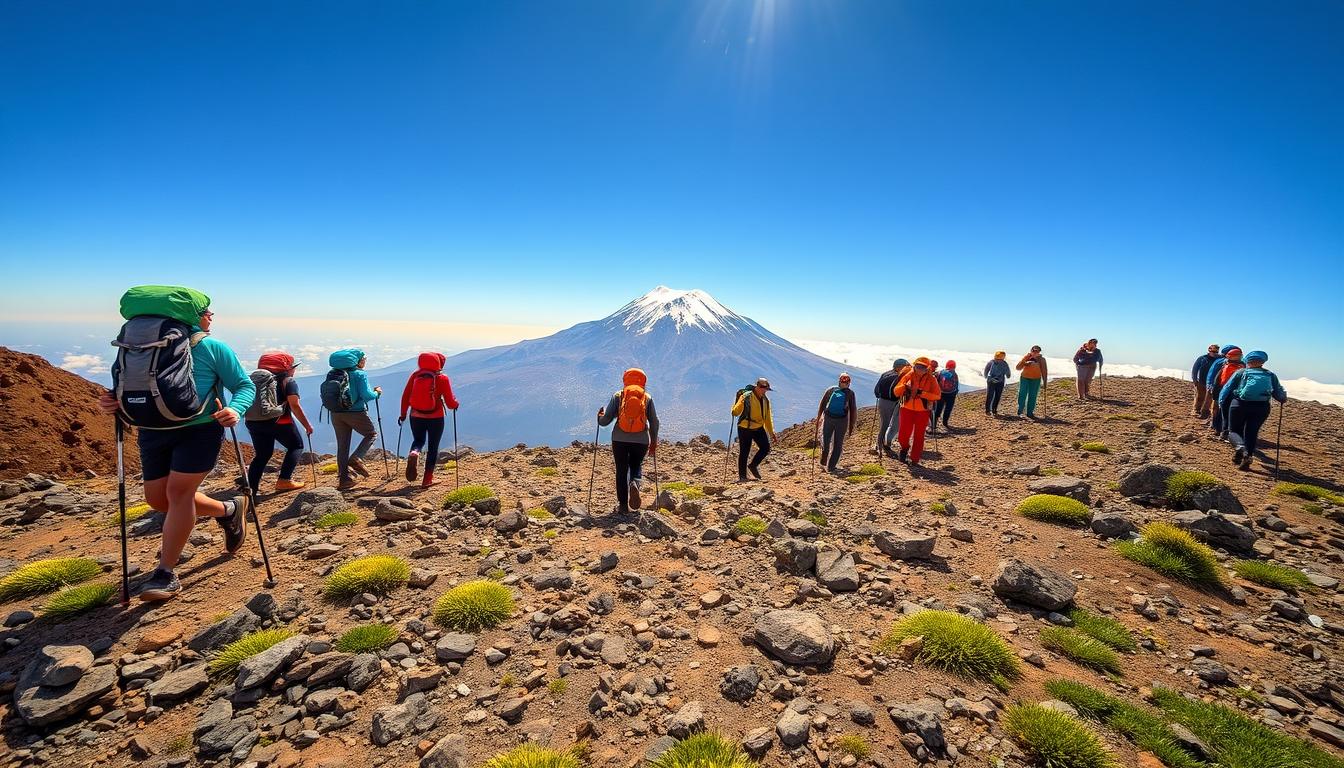
Did you know nearly 30,000 people try to reach Mount Kilimanjaro’s summit each year? This dormant volcano, standing at 5,895 meters, offers a life-changing journey. But, the extreme altitude makes professional help and careful planning essential components of your success.
This guide offers a trustworthy overview to help you tackle your expedition. We’ll compare different paths, look at top trekking companies, and reveal hidden costs. By understanding the hiking mt kilimanjaro logistics, you can turn a daunting challenge into a fulfilling adventure.
Key Takeaways
- Success depends on choosing the right route for proper acclimatization.
- Professional guides and support crews are vital for safety at high altitudes.
- Budgeting must include gear, tips, and travel insurance, not just tour fees.
- Physical conditioning should begin months before your departure date.
- Understanding the mountain’s environment helps you prepare for rapid weather changes.
Why Climb Kilimanjaro?
Reaching Kilimanjaro’s peak is a mix of physical challenge and personal growth. Many choose to climb mount kilimanjaro for its unique chance to stand at 5,895 meters. This is without needing mountaineering skills, making it a top spot for life-changing experiences in Tanzania.
The Allure of Africa’s Highest Peak
The mountain is a giant, towering over the plains. It’s known as the “Roof of Africa,” giving trekkers a breathtaking perspective of the continent. When you climb kilimanjaro, you explore different zones from rainforests to arctic summit conditions.
Each day on the trail is a new adventure. Watching the sunrise from Uhuru Peak is unforgettable. It’s a distinctive achievement that combines natural beauty with high-altitude exploration.
Personal Growth and Adventure
The journey is also a chance for personal growth. Climbers learn patience and resilience through the slow pace. The final push to the summit requires mental strength.
It’s also about teamwork and shared goals. Whether solo or with a group, the bond with guides and trekkers is key. Climbing Kilimanjaro is a meaningful challenge that boosts confidence and offers a new perspective on oneself.
Understanding the Routes
There are many paths to the Roof of Africa, each with its own charm. Picking the right trail is key when you plan to climb mount Kilimanjaro. Each route offers a unique view of the landscape, requiring different physical readiness and time.
Machame Route: The Whisky Route
The Machame route is the most sought-after for its scenic beauty. It’s called the “Whisky Route” for its challenge. Trekkers get to see the mountain’s varied ecosystems. It’s busier, but the steep paths help with acclimatization.
Lemosho Route: The Scenic Choice
The Lemosho route is perfect for a quieter start with a high success rate. It’s known for its stunning scenery and offers an eight-day journey. This longer time helps your body adjust to the altitude, hiking through untouched forests.
Rongai Route: The Less-Traveled Path
The Rongai route comes from the north, giving a different view than the south. It’s great for those who like peace while hiking mt kilimanjaro. This path is drier and less steep, making it a good choice for avoiding crowds.
Marangu Route: The Coca-Cola Route
This route is called the “Coca-Cola Route” because it offers hut-based accommodation. It’s chosen by those looking for a budget-friendly climb. Though it’s the shortest, longer routes are safer for acclimatization.
| Route | Duration | Difficulty | Accommodation |
|---|---|---|---|
| Machame | 6-7 Days | High | Camping |
| Lemosho | 7-8 Days | Moderate | Camping |
| Rongai | 6-7 Days | Moderate | Camping |
| Marangu | 5-6 Days | Moderate | Huts |
Costs of Climbing Kilimanjaro
Knowing the true cost of climbing Kilimanjaro is key to preparing. Many first-timers are surprised by the total cost. This is because supporting a team on the mountain is complex.
Higher prices often mean better safety standards, quality equipment, and fair wages for locals. Going for the cheapest option can risk your safety and comfort. It’s better to invest in a quality climb.
Breakdown of Expenses
The cost of your trek includes many essential services. These are things like park entrance fees, camping permits, and rescue fees. These are all paid to the Kilimanjaro National Park authorities.
Your payment also supports a dedicated team. This includes lead guides, assistant guides, porters, and camp cooks. They ensure your health and comfort. Here’s what a standard expedition package usually includes:
| Expense Category | Description | Impact on Success |
|---|---|---|
| Park Fees | Mandatory government permits | Required for entry |
| Staff Wages | Guides, porters, and cooks | Ensures professional support |
| Logistics | Transport and food supplies | Maintains health and energy |
Budgeting for Your Trek
When comparing operators, check what’s included in the price. Most good companies offer a full package. But, you need to plan for things not included.
Effective budgeting means setting aside for flights, insurance, and visas. Also, consider the cost of high-altitude gear. Transparency is key; ask for a detailed list before booking.
Possible Extra Costs
Your tour package covers most of the trip, but you’ll need to budget for personal expenses. Gratuities for the crew are expected and can cost around $300 per climber. This depends on group size and trip length.
Also, plan for vaccinations, medical checks, and hotel stays before or after. Don’t forget these costs. They’re important for a smooth experience on Kilimanjaro. Preparing well lets you focus on the mountain challenge.
Preparing for Your Kilimanjaro Adventure
Getting ready for your trip to Africa’s highest peak is more than just excitement. It needs a solid plan for your body and logistics. The climb’s high altitude and tough terrain require careful thought. By focusing on these areas, your journey will be safe and memorable.
Physical Training and Fitness Tips
To conquer Kilimanjaro, boost your heart health and leg power. Your training should match the climb’s demands, focusing on steady walks over quick, intense efforts.
- Practice long walks with a heavy backpack to get your muscles ready.
- Work on uphill exercises like stair climbing or treadmill inclines.
- Make sure to include rest days to avoid injuries and let your body adjust.
Regular training beats random, intense workouts. Begin your training three to four months before your trip.
What to Pack for the Climb
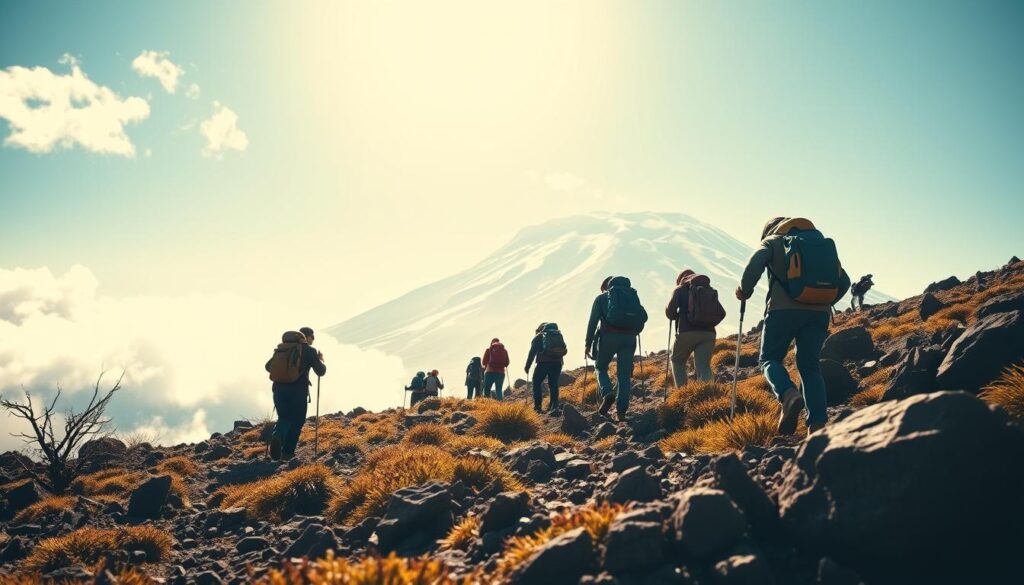
Packing for hiking mt kilimanjaro means balancing warmth and light gear. You’ll face huge temperature changes, from hot at the start to cold at the top.
Wearing layers is key. Start with moisture-wicking clothes, add insulating layers, and top it off with a waterproof jacket.
- Essential gear: Good hiking boots, trekking poles, and a comfy backpack.
- Sleeping equipment: A warm sleeping bag for cold nights is a must.
- Rental options: Rent heavy items like parkas or sleeping mats if you don’t want to buy them.
Vaccinations and Health Considerations
Your health is the most critical thing on this adventure. Before climbing Kilimanjaro, talk to a travel clinic about needed shots, like Yellow Fever or Typhoid.
Carry a personal first-aid kit with items for blisters, pain, and any meds you take. Make sure your travel insurance covers high-altitude treks and emergency flights.
When hiking mt kilimanjaro, pay attention to your body and talk to your guides. Good health planning and realistic goals will help you reach the summit safely.
Choosing the Right Trekking Company
Choosing the right partner is key when planning to climb Mount Kilimanjaro. A good operator does more than just plan your trip. They make sure you’re safe, comfortable, and reach the summit. The trek’s physical challenges mean your choice of agency greatly affects your experience.
What to Look for in a Guide
When you plan to climb Kilimanjaro, look for companies with high standards and safety rules. A good company has certified guides who know how to handle altitude sickness. They watch your health closely.
Also, check if the company treats their crew well. Look for fair wages, proper gear for porters, and strict weight limits. Being a member of the Kilimanjaro Porters Assistance Project (KPAP) is a good sign.
Top Companies for Kilimanjaro Treks
Don’t just look for the cheapest option. Instead, choose based on their track record and what they offer. Good companies have clear prices that include all necessary costs. Compare a few to see how they handle logistics and group sizes.
| Feature | Budget Operator | Premium Operator |
|---|---|---|
| Guide Certification | Basic | Advanced/Medical |
| Porter Welfare | Variable | KPAP Certified |
| Safety Equipment | Minimal | Oxygen/Pulse Oximeter |
| Group Size | Large | Small/Private |
Reading Reviews and Testimonials
When reading reviews for climb mount kilimanjaro, look for consistent praise on communication and staff. Ignore summit photos alone. Focus on meal quality and support during tough days. Good reviews highlight how the crew handled unexpected challenges.
Also, see how the company responds to negative feedback. A professional will address concerns openly. This shows they value your well-being. By carefully choosing, you ensure a safe and successful climb.
Understanding the Climatic Conditions
Kilimanjaro is a unique challenge because you go through many climate zones. As you climb kilimanjaro, you’ll see everything from humid rainforests at the start to cold, arctic conditions at the top. This big change means you need to be ready for quick changes in temperature and humidity.
Best Times to Climb
Choosing the right time for your climb is key for success. The mountain has two main dry seasons that are best for hiking mt kilimanjaro.
- January to March: These months usually have clear skies and warmer weather, but trails can be busier.
- June to October: This is the top time to trek, with dry conditions and great views for photos.
Even though these months are best, the weather can be unpredictable. Always check with your trekking company about the latest weather forecast before setting your travel dates.
Packing for Weather Variability
Good packing is key for comfort when hiking mt kilimanjaro. Instead of one heavy jacket, use a layering system to adjust to the day’s changes.
Your gear should manage moisture and keep you warm. Here are some must-haves for your pack:
- Base Layers: Moisture-wicking fabrics like synthetic or merino wool to keep you dry.
- Insulating Layers: A fleece or down jacket to keep warm in the cold evenings.
- Waterproof Shells: Good rain gear to keep you dry in sudden rain in the lower zones.
- Sun Protection: High-SPF sunscreen, polarized sunglasses, and a wide-brimmed hat for the sun in the alpine sections.
By getting ready for the mountain’s extremes, your climb can be safe and fun. Good gear lets you enjoy the views without worrying about the weather.
Acclimatization: Key to Success
Success on the mountain is not about being fast. It’s about letting your body adjust to the thin air. When you plan to climb Kilimanjaro, focus on adapting your body, not just being strong. Even top athletes can face challenges if they don’t consider the high altitude’s effects.
Understanding Altitude Sickness
Acute Mountain Sickness (AMS) happens when your body can’t adjust to less oxygen. Signs include persistent headaches, nausea, dizziness, and fatigue. It’s a myth that being fit means you won’t get these symptoms.
Altitude sickness affects everyone differently, no matter their fitness. Spotting these signs early is key to staying safe. If you feel sick while hiking mt kilimanjaro, tell your guide right away. Don’t try to ignore the discomfort.
Acclimatization Techniques
Choosing a longer route is the best way to ensure success. Trekkers on eight-day routes have better success rates than those on five-day climbs. Giving your body more time to adapt is the single most important factor for success.
Here are some key practices to follow:
- Maintain a slow, steady pace: Guides will tell you to walk “pole pole,” which means slowly in Swahili.
- Hydration is critical: Drink lots of water to help your body adjust.
- Prioritize nutrition and sleep: Your body needs energy to adapt, so eat well and rest when you can.
- Monitor your health: While guides may use pulse oximeters, your own clinical symptoms are the best guide to your health.
Deciding to keep going or descend should be based on professional advice and your body’s signals. When you climb Kilimanjaro, being patient is key. By respecting the mountain and listening to your body, you increase your chances of reaching the summit safely while hiking mt kilimanjaro.
Trekking Etiquette
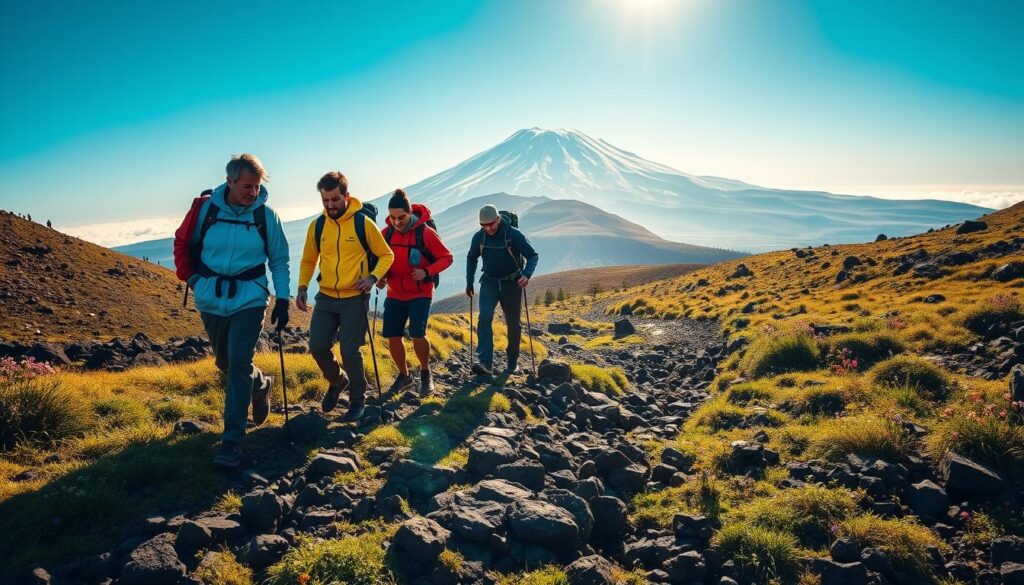
When you choose to hike Mt. Kilimanjaro, you enter a world full of culture and beauty. It’s not just about the climb; it’s about connecting with the people and nature around you. Being mindful helps support the local economy and keeps the mountain beautiful for others to see.
Respecting Local Culture
The people of Tanzania are known for their kindness and rich traditions. When you climb mount kilimanjaro, always ask before taking pictures of locals or their homes. Saying “Jambo” in Swahili can help you connect with your team and the communities you meet.
Treating your support team with respect is key. Make sure they carry safe loads and get fair pay. Transparent tipping practices are important for a fair trekking industry. Talk to your trekking company to learn how to tip properly and show your appreciation.
Environmental Responsibility
Keeping the mountain beautiful is everyone’s job. Follow Leave No Trace and hiking rules to protect the environment. Stay on paths to avoid damaging the soil and plants.
Managing waste is also important. Take all non-biodegradable trash, like plastics, with you. Use water wisely and avoid harsh chemicals near water sources. By hiking with care, you help keep Mt. Kilimanjaro a special place for all.
- Always pack out what you pack in.
- Respect wildlife by observing from a distance.
- Support local conservation efforts whenever possible.
- Follow your guide’s instructions regarding trail safety and preservation.
What to Expect on the Trek
Life on the mountain is unique, blending hard work with quiet moments. When you choose to climb Kilimanjaro, you step into a world ruled by the sun and altitude. Knowing this rhythm helps you get ready for the adventure.
Daily Schedule Overview
Days start early with a hot drink in your tent. After a big breakfast, the group moves slowly to adjust to the high altitude. You’ll walk for hours, stopping for a light lunch before reaching camp by mid-afternoon.
- Early Morning: Wake up, pack gear, and enjoy a warm breakfast.
- Mid-Day: Steady trekking with frequent water breaks and a trail lunch.
- Late Afternoon: Arrival at camp, afternoon tea, and time for rest or short walks.
- Evening: Dinner, daily health checks, and early retirement to your sleeping bag.
Meals and Accommodation
Your experience depends on your support team. While hiking mt kilimanjaro, you’ll get meals that keep your energy up. Good operators have dining tents for comfortable meals and socializing.
Accommodation varies by route. The Marangu route has communal huts, while other paths have high-quality tents. These tents are a cozy sanctuary after a long day.
| Feature | Standard Experience | Premium Experience |
|---|---|---|
| Dining | Basic trail meals | Fresh, hot, multi-course meals |
| Shelter | Shared mountain huts | Private, spacious mountain tents |
| Support | Essential crew | Full service with dining tent |
Wildlife and Scenery
The view changes as you go up, from rainforests to alpine deserts and the summit. This change is a big reward of hiking mt kilimanjaro. You’ll see vast views of the African plains.
Though it’s not like a safari, the mountain has unique plants and animals. Look out for blue monkeys and giant groundsels. Every step on climb Kilimanjaro shows you the mountain’s beauty.
Trekking Safety Tips
Hiking Mt Kilimanjaro is a rewarding challenge, but it demands strict adherence to safety protocols. This ensures a successful summit. The mountain offers breathtaking views, but the high-altitude environment requires vigilance about your physical condition. By following established safety guidelines, you can significantly reduce risks and focus on the experience of a lifetime.
Staying Hydrated and Healthy
Maintaining optimal health is the foundation of a safe expedition. Dehydration often exacerbates altitude-related issues, so you must drink plenty of water throughout the day, even if you do not feel thirsty. Proper hydration helps your body adjust to the thinning air more effectively.
Beyond water intake, personal hygiene and nutrition play vital roles in your well-being. Simple habits can prevent common ailments that might derail your progress:
- Hand Hygiene: Use alcohol-based sanitizers frequently, before meals.
- Sun Protection: The equatorial sun is intense at high altitudes; wear high-SPF sunscreen and polarized sunglasses.
- Blister Prevention: Address “hot spots” on your feet immediately with moleskin or specialized tape.
- Symptom Reporting: Always communicate honestly with your guides about any headaches, nausea, or dizziness.
“The mountain does not care about your ego; it only respects your preparation and your ability to listen to your body.”
Emergency Procedures
When you choose to climb Mount Kilimanjaro, you must understand the support systems in place. Reputable trekking companies maintain rigorous emergency protocols to ensure the safety of every participant. Before you book, ask your operator about their specific communication methods and how they handle medical emergencies on the trail.
Professional guides are trained to monitor oxygen saturation levels and heart rates daily. If a climber shows signs of severe altitude sickness, the team will initiate a prompt descent to a lower elevation. This is the most effective way to stabilize a trekker’s condition.
Before you depart, verify that your travel insurance policy provides complete coverage for your trip. Ensure your plan includes the following protections:
| Coverage Type | Importance |
|---|---|
| High-Altitude Trekking | Essential for mountain activities |
| Medical Evacuation | Covers emergency transport |
| Trip Cancellation | Protects your financial investment |
Taking the time to prepare for these scenarios allows you to climb mount kilimanjaro with confidence. Knowing that you have a robust safety net enables you to fully enjoy the beauty of the climb while staying protected.
Stories from Climbers
Every journey to the summit of Kilimanjaro is filled with unique stories. The trek’s physical demands are tough, but the emotional and mental journey leaves a lasting mark.
Memorable Experiences on Kilimanjaro
Many trekkers find the profound silence at high-altitude camps transformative. This silence, away from daily noise, allows for deep reflection and a new perspective.
The summit night is a highlight for many who climb kilimanjaro. Climbing steep, dark slopes under the stars requires focus and the support of the trekking crew.
“The encouragement from our lead guide, who had summited over forty times, kept us moving when our legs wanted to quit. It was not just about the peak; it was about the collective spirit of the group.”
Lessons Learned
Experienced climbers say hiking mt kilimanjaro tests patience and humility. The mountain demands respect, and successful trekkers stay flexible and listen to their bodies.
Key takeaways from those who have completed the journey include:
- Listen to your body: Recognizing early signs of altitude sickness is vital for safety.
- Trust your guides: A seasoned guide knows the mountain’s temperament and when to adjust the pace.
- Prioritize safety: Deciding to descend early is a sign of strength, not failure, when conditions become hazardous.
The experience of hiking mt kilimanjaro teaches that the summit is just part of the adventure. Whether you reach the top or descend early, the lessons on resilience and teamwork stay with you long after you return home.
After the Climb: What Next?
Reaching the summit of the Roof of Africa is a big achievement. It marks the end of a tough challenge but the start of a lasting memory. Planning is key, from choosing good operators like G Adventures or Intrepid Travel to making sure you acclimatize properly.
Every choice you make before you go helps make your journey safer. This is important when you climb mount kilimanjaro.
Celebrating Your Achievement
Take time to rest in Arusha’s green surroundings or relax on Zanzibar’s beaches. Many find peace by exploring Arusha National Park or by joining a local coffee tour. These activities help you ease back into daily life after hiking mt kilimanjaro.
Think about your journey by writing in a journal or organizing your photos. Show gratitude to your mountain crew, as they were key to your success. True happiness comes from the lessons you learned on the trail, not just the view from the top.
Good preparation leads to a rewarding experience when you climb kilimanjaro. It leaves you with stories that will last forever.