
Nearly 30 million people sail on ocean voyages each year, yet many miss the financial risks in complex itineraries. One missed flight or medical emergency can turn a dream vacation into a logistical nightmare.
A sea-based getaway includes prepaid excursions, tight flight connections, and other moving parts. Securing travel insurance for cruises helps protect you from these unexpected problems.
No policy can stop a storm or delay, but the right protection can manage costs from sudden changes.
Choosing the right cruise travel insurance covers medical evacuations, lost baggage, and trip interruptions. Preparing early gives you peace of mind, so you can enjoy the sea without worrying about the “what ifs.”
Key Takeaways
- Ocean voyages involve complex logistics that standard policies might not fully cover.
- Financial protection helps mitigate losses from flight delays and missed departures.
- Medical emergencies at sea often require expensive specialized evacuation services.
- Prepaid arrangements are shielded against unexpected trip cancellations.
- Coverage offers essential security, allowing you to focus on your vacation experience.
What Travel Insurance for Cruises Can Cover
A cruise vacation differs from a hotel stay because it is a moving maritime experience. Specialized travel insurance for cruises helps cover risks linked to ocean travel and multi-port trips.
These policies protect more than the ship itself. They can help with flight delays before departure or medical emergencies in foreign locations.
Protection before, during, and after the sailing
Comprehensive cruise insurance coverage protects your entire trip. It starts when you leave home and ends when you return safely.
- Before departure: Protection against trip cancellation due to illness or unforeseen emergencies.
- During the sailing: Coverage for shipboard medical care, missed port excursions, and emergency evacuations.
- After the sailing: Assistance with travel delays or lost luggage during your journey back home.
“The best travel plans are those that account for the unexpected, allowing you to focus on the horizon rather than the risks.”
How cruise coverage differs from standard travel insurance
Many travelers think a basic policy is enough, but travel insurance for cruises offers special advantages. Standard policies may not cover missed ship departures or weather-related itinerary changes.
These specialized travel insurance benefits fit the unique needs of cruise travel. They cover trips across several countries, with the ship serving as your hotel and main transportation.
Covered reasons versus optional upgrades
You should know the difference between standard cruise insurance coverage and optional add-ons. Most policies list covered reasons, such as documented illness or severe weather that prevents you from reaching the ship.
Some travelers want more flexibility through optional upgrades like “Cancel For Any Reason” (CFAR) coverage. The following table shows the typical differences between these categories:
| Feature | Standard Coverage | Optional Upgrade (CFAR) |
|---|---|---|
| Cancellation | Only for listed, covered reasons | Any reason you choose |
| Reimbursement | Usually 100% of trip cost | Typically 50% to 75% of cost |
| Flexibility | Strict documentation required | High level of personal choice |
Always remember that each policy has its own limits, exclusions, and waiting periods. Review the policy wording carefully before buying to confirm it meets your needs.
Why Cruise Travel Has Different Insurance Risks
Unlike a hotel stay, a cruise ship follows a strict schedule that waits for no one. If you miss the gangway, the ship leaves without you. This makes securing travel insurance for international travel vital when planning your trip.
Nonrefundable deposits and final payment deadlines
Cruise lines often require large, nonrefundable deposits months before sailing. After the final payment deadline, your entire trip cost may be at risk if you cancel. Protecting your full prepaid trip cost matters because cruise lines rarely offer full cash refunds for last-minute cancellations.
Multiple destinations and international medical care
Cruises often visit several countries in one week, which can complicate medical and legal protections. Local medical facilities may not accept your domestic health insurance. Strong coverage helps you access quality care anywhere on the high seas.
Port delays, missed departures, and tight connections
A flight delay can cause you to miss your embarkation and face major costs. This is where missed connection coverage helps pay for reaching the ship at its next port. Also, travel delay insurance helps cover meals and hotels after weather or mechanical problems interrupt your plans.
Why arriving at the embarkation port early matters
Experienced cruisers often reach the departure city at least one day before sailing. This practical buffer protects you from airline strikes, lost luggage, and severe weather. Arriving early greatly lowers your chance of filing a missed departure claim.
| Risk Factor | Potential Impact | Insurance Solution |
|---|---|---|
| Flight Delay | Missed Embarkation | Missed connection coverage |
| Itinerary Change | Lost Excursions | Trip interruption benefits |
| Travel Disruption | Extra Hotel Costs | Travel delay insurance |
| Medical Emergency | High Hospital Bills | Emergency medical coverage |
Trip Cancellation and Interruption Coverage
Protecting your cruise investment requires knowing how cancellation and interruption benefits work. Unexpected events can change your plans before departure or while you are at sea.
Trip cancellation insurance helps protect nonrefundable deposits when you must cancel before your ship departs. In contrast, trip interruption insurance helps when a covered emergency forces you to end your vacation early.
Common covered reasons for canceling a cruise
Standard policies usually cover specific, unexpected events that stop you from traveling. Policy documents often call these events “named perils.”
- A physician-documented illness or injury that prevents travel.
- The death of an immediate family member.
- Severe weather conditions that result in the cancellation of your cruise line services.
- Mandatory jury duty or a subpoena that cannot be postponed.
What trip interruption benefits may reimburse
If you must return home early, interruption benefits can reduce the cost of unused cruise days. They often cover a one-way flight home and the value of missed days aboard the ship.
“The true value of travel protection lies in its ability to turn a potential financial disaster into a manageable inconvenience, allowing you to focus on your health and safety.”
When “cancel for any reason” coverage may be useful
You may want to cancel for a reason that a standard policy does not list, such as changing your mind. In that case, cancel for any reason coverage may offer a useful, optional upgrade.
Restrictions, deadlines, and partial reimbursement
This flexible coverage has strict requirements. You usually must buy this add-on within a set period, often 14 to 21 days after your initial trip deposit.
- Partial Reimbursement: Most plans only cover 50% to 75% of your nonrefundable costs.
- Time Sensitivity: You must cancel your trip at least 48 to 72 hours before your scheduled departure.
- Higher Premiums: Expect to pay a higher total premium for the added flexibility of this benefit.
Medical Coverage on a Cruise
Securing robust emergency medical coverage is vital when planning an international cruise vacation. Ships have modern medical facilities, but onboard care can still cost much more than expected. Travelers should make this protection a key part of their international travel medical insurance strategy.
Shipboard medical treatment and hospital bills
Cruise ships usually have infirmaries staffed by licensed doctors and nurses. They handle urgent care but operate privately and set their own fees. You may need to pay upfront, creating large out-of-pocket costs without proper insurance.
Coverage for illness, injury, and COVID-19-related care
Comprehensive policies cover many medical needs, including sudden illnesses and accidental injuries. Many plans also cover COVID-19-related care, including testing or quarantine costs. It is essential to review your policy documents to confirm these situations fit within your coverage limits.
Primary versus secondary medical insurance
Knowing the difference between primary and secondary coverage helps you manage claims. Primary coverage pays medical bills first, regardless of other insurance. Secondary coverage supplements other insurance, requiring a claim with your health provider before covering the remaining balance.
Why Medicare and domestic health plans may leave gaps overseas
Many travelers mistakenly assume domestic health insurance provides full protection abroad. Most U.S.-based plans, including Medicare, provide little or no coverage outside the country. Relying only on these plans can create massive financial liability during a medical emergency.
| Coverage Type | Primary Insurance | Secondary Insurance |
|---|---|---|
| Payment Priority | Pays first | Pays after other plans |
| Claim Process | Direct to insurer | Requires proof of denial |
| Best For | Immediate reimbursement | Lower premium costs |
Emergency Medical Evacuation and Repatriation
Medical evacuation insurance gives travelers a safety net during unexpected health crises far from home. Cruise ships have modern medical centers but cannot handle every complex surgery or long-term intensive care need. When a patient’s condition exceeds the ship’s staff abilities, professional transport to a land-based facility becomes necessary.
When evacuation coverage becomes necessary
Evacuation usually begins when a ship’s physician finds the required care unavailable onboard. This may involve acute conditions such as cardiac events, severe trauma, or sudden neurological issues. Strong emergency medical coverage helps pay for these urgent transfers, so travelers do not face the full cost.
Insurers often require pre-approval for these services. They work with medical professionals to confirm that the transfer is medically necessary. If your health history raises concerns, review our travel insurance for pre-existing conditions coverage to understand your protections.
Helicopter transfers, air ambulances, and transport to a hospital
Transport method depends on the ship’s location and the medical situation’s severity. In coastal waters, a helicopter transfer to a nearby port is common. In remote locations, insurers may arrange an air ambulance or commercial flight with specialized medical support staff.
- Helicopter transfers: Used for rapid extraction when the ship is within range of land.
- Air ambulances: Dedicated aircraft staffed with doctors and nurses for critical patients.
- Commercial medical escorts: Used for stable patients who require professional monitoring during a standard flight.
Repatriation to the United States after a serious medical event
After a local hospital stabilizes the patient, the focus often shifts to bringing them home. Repatriation coverage is designed to cover transport costs back to the United States once the traveler is fit to fly. This process differs from emergency evacuation because it supports long-term recovery in a familiar environment.
Checking coverage limits and transportation arrangements
Travelers should review their policy to learn who controls transport arrangements. Most reputable insurers have a 24/7 assistance team that coordinates with local authorities and medical providers. It is rarely the case that a traveler can choose their own transport method or provider without insurer approval.
Always verify the specific dollar limits in your policy documents. High-limit medical evacuation insurance is essential because an international air ambulance can cost tens of thousands of dollars. Coverage for these costs brings peace of mind and lets you focus on recovery, not emergency expenses.
Missed Connections, Delays, and Cruise-Specific Problems
Arriving at the pier and watching your ship leave is a traveler’s nightmare, but insurance can limit the financial loss. When a flight delay or mechanical problem keeps you from reaching the port, the situation can feel overwhelming. Having the right protection in place transforms a potential disaster into a manageable logistical hurdle.
Reimbursement after missing the ship
If you miss your departure for a covered reason, such as a major airline delay, missed connection coverage can help. This benefit usually reimburses the cost of reaching the cruise ship at its next port of call. It may also cover extra transportation costs needed to reach that destination.
To qualify, you usually must document the delay’s cause carefully. Airlines often provide written statements that explain why a flight was delayed or canceled. Keeping these records is essential for a successful claim.
Travel delay benefits for hotels, meals, and transportation
When your journey is interrupted, you may become stranded far from home or your cruise ship. Travel delay insurance provides a safety net by covering reasonable costs during unexpected waits. It often covers a hotel room, meals, and needed local transportation.
Most policies require a minimum delay, such as six or twelve hours, before benefits begin. Keep itemized receipts for every purchase made during the delay. Insurance providers will not reimburse undocumented expenses; a clear paper trail is vital.
Coverage for canceled ports and itinerary changes
Cruise lines sometimes change routes because of weather, safety concerns, or operational needs. While frustrating, distinguish financial loss from a simple loss of enjoyment. Trip interruption insurance generally focuses on the financial impact of a shortened or significantly altered trip.
If a port is skipped, you may qualify for a refund on prepaid shore excursions you cannot attend. Policies rarely compensate you for missing a specific destination. Managing your expectations regarding itinerary changes is a key part of stress-free travel.
What insurance may not cover when the cruise line changes its schedule
Travel insurance does not protect you from every cruise line decision. A cruise line schedule change for operational requirements, such as fuel efficiency or port availability, is usually not covered. Insurance typically excludes losses resulting from the cruise line’s own scheduling adjustments.
Review your policy’s language about “common carrier” delays and “itinerary changes.” Knowing the difference between a covered delay and a standard schedule change helps you plan confidently. Always verify the waiting periods and documentation rules before you depart.
Baggage, Personal Belongings, and Travel Documents
Reliable baggage insurance protects your personal items while you travel by sea. Even organized travelers can face problems between airports, hotels, and cruise terminals.
Lost, stolen, delayed, or damaged luggage
When bags fail to arrive on time, missing belongings can hurt your vacation. Coverage may repay essential purchases when luggage stays delayed for 12 or 24 hours.
If bags are permanently lost or stolen, the policy may help replace clothing and personal items. Report the loss at once to the cruise line or airline for claim records.
Coverage for passports, medication, and essential purchases
Losing a passport or prescription medication requires quick action. Baggage insurance often helps pay to replace travel documents or get emergency prescription refills.
Keep medication in your carry-on, not checked luggage, to avoid delays. If a delay forces you to buy toiletries or clothing, keep every receipt for reimbursement.
Valuable items, electronics, and baggage sublimits
Many travelers think high-end cameras and laptops have full coverage. However, policies often set specific sublimits for these items. These caps limit payment for one item or group of goods.
Review policy details before departure to understand these caps. If you carry expensive gear, consider extra coverage or confirm your policy protects your needs.
Why receipts and police reports can affect a claim
Documentation supports every successful insurance claim. Without proof of ownership or value, insurers may have trouble processing your request.
- Receipts: Essential for proving the value of items purchased during a delay.
- Police Reports: Required if your belongings are stolen while in port or at a hotel.
- Baggage Reports: Must be filed with the carrier as soon as you notice the loss.
| Scenario | Action Required | Typical Coverage |
|---|---|---|
| Delayed Luggage | Obtain a written report from the carrier | Reimbursement for essentials |
| Stolen Property | File a local police report | Replacement value minus depreciation |
| Damaged Items | Take photos and keep the item | Repair or replacement cost |
Pre-Existing Conditions and Other Important Exclusions
Before you sail, learn how certain conditions and activities can affect a successful claim. Understanding cruise insurance exclusions helps protect your finances during the voyage.
How insurers define a pre-existing medical condition
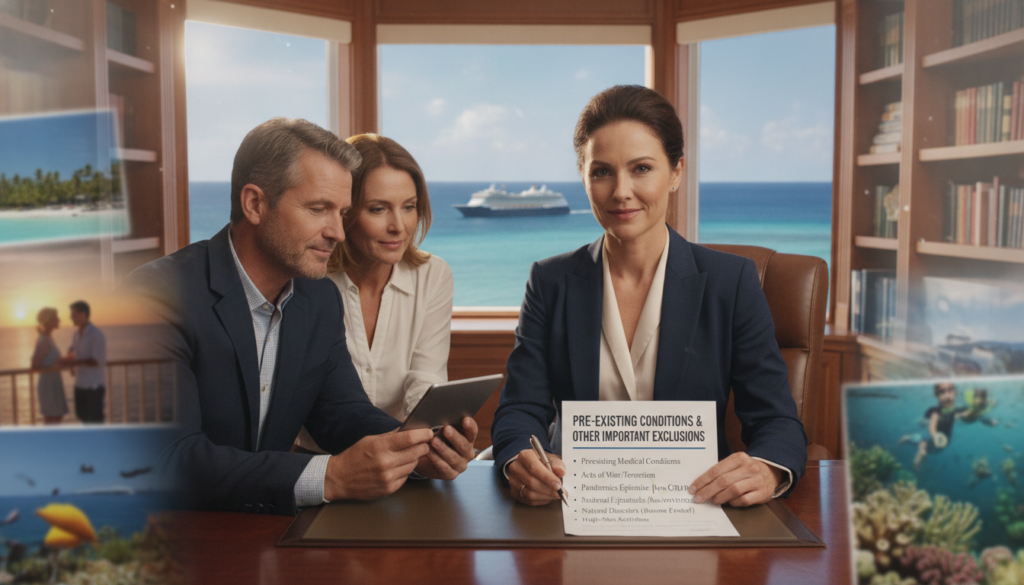
Insurers define a pre-existing condition as an illness, injury, or medical issue existing during a set “look-back” period before coverage began. This period often lasts 60 to 180 days before your coverage starts. It is important to note that symptoms may count, even without a formal diagnosis from a doctor.
If you seek treatment or change medication during this window, insurers usually flag the condition. Each provider uses different criteria, so do not assume companies share the same definition. Check the look-back period listed in your policy documents.
Requirements for a pre-existing condition waiver
Many travelers can cover these conditions with a pre-existing condition waiver. To qualify, you usually must buy the policy within a set time, often soon after your first trip deposit. You usually must also insure the cruise’s full, non-refundable cost.
These steps let you avoid standard exclusions for claims tied to your health history. Failure to meet these strict deadlines often leads to automatic denial of medical claims tied to earlier health problems.
Typical exclusions involving alcohol, risky activities, and unattended belongings
Beyond medical history, policies often list cruise insurance exclusions tied to behavior and safety. They often exclude incidents involving a traveler under the influence of alcohol or non-prescription drugs. They may also exclude injuries from high-risk activities, including extreme sports or unauthorized excursions.
Unattended belongings create another common problem for cruisers. If luggage or electronics are stolen from a public area, the insurer may deny your claim because you lacked reasonable care. Keep valuables secure to remain eligible for reimbursement.
Reading the policy certificate instead of relying on marketing language
Marketing brochures highlight a plan’s best features but rarely show its full legal meaning. Read the policy certificate to understand benefit definitions, eligibility requirements, and limits. The certificate is the only legally binding document that determines what your trip covers and excludes.
Cruise Line Protection Plans Versus Independent Travel Insurance
Many travelers face a tough choice when booking a cruise: buy the cruise line’s plan or shop elsewhere. A careful cruise insurance comparison shows whether your whole trip is protected, not only your time aboard.
What cruise line plans commonly include
Most cruise line insurance plans offer basic protection for one cruise booking. They often include trip cancellation insurance, but may provide future cruise credits instead of cash. That choice can limit recovery if you never sail with that company again.
These plans often exclude travel arrangements booked outside the cruise line. If you book airfare, hotels, or excursions separately, the policy may not cover them. This gap can cost you money if delays or cancellations happen before you reach the port.
Advantages of buying coverage from an independent insurer
Choosing third-party travel insurance gives your vacation a broader safety net. Independent policies usually cover your full trip, including flights, pre-cruise hotels, and non-refundable tour deposits. This broad protection can keep you from paying for lost travel parts yourself.
Independent plans often provide higher limits for emergency medical care and evacuation. Cruise lines may cap medical benefits, while independent coverage helps protect you from high costs at sea or abroad. Many providers also offer cancel for any reason coverage, which gives more flexibility than cruise plans.
Comparing cancellation credits, cash reimbursement, and medical limits
Understanding the financial differences between these options can bring peace of mind. The table below shows how each policy handles common travel risks.
| Feature | Cruise Line Plan | Independent Insurance |
|---|---|---|
| Reimbursement | Future Cruise Credits | Cash Reimbursement |
| Scope of Coverage | Cruise booking only | Entire trip investment |
| Medical Limits | Often lower | Typically higher |
| Flexibility | Limited | High |
Questions to ask before accepting the cruise line’s plan
Before buying, review the offer’s specific terms. These questions can show whether its convenience outweighs the possible trade-offs:
- Does this plan cover my airfare and hotel costs, or only the cruise fare?
- Will I receive a cash refund if I cancel, or only a future cruise credit?
- Are there specific exclusions for pre-existing medical conditions?
- What are the exact limits for emergency medical evacuation?
- Does this policy provide true protection for my entire travel investment?
Compare these details to choose the policy that best protects your journey. Your goal is to protect your hard-earned money and enjoy a worry-free vacation.
How to Compare Travel Insurance Policies for Cruises
Use a clear framework for your cruise insurance comparison. Do not judge a policy by price alone; match it to your travel risks. A thoughtful review can protect you from challenges at sea.
Coverage limits that deserve the closest attention
When reviewing cruise insurance coverage, look beyond basic trip cancellation benefits. Strong plans include emergency medical coverage, since many standard health plans offer limited protection outside the United States. Check medical evacuation insurance limits because helicopter transfers from ships can cost an astronomical amount.
Check baggage insurance limits before choosing a policy. Lost or delayed luggage may require replacement items like medication, formal wear, and electronics. Review sublimits for high-value items so your expensive belongings have full protection.
Deductibles, exclusions, and claims procedures
Understanding cruise insurance exclusions matters as much as knowing what a policy covers. Policies may restrict pre-existing conditions, alcohol-related incidents, or extreme sports. Read the fine print to learn whether your planned activities face restrictions or full exclusions.
Evaluate the claims process before buying third-party travel insurance. Look for companies with 24/7 assistance hotlines and digital claim filing. A clear process can help during a stressful travel emergency.
Comparing policies for families, older travelers, and groups
Your personal profile affects the protection you need. Families may value child-focused benefits and flexible cancellation options, while older travelers may need higher medical limits and pre-existing condition waivers. Groups may prefer primary coverage to avoid coordination problems with other insurers.
Using the total prepaid trip cost to estimate coverage needs
The total cruise insurance cost often depends on your nonrefundable trip investment. Add prepaid expenses, including airfare, excursions, and cabin fees, to find your coverage amount. Full coverage can prevent financial loss, while avoiding excess coverage helps protect your budget.
| Traveler Profile | Primary Focus | Key Coverage Need |
|---|---|---|
| Families | Flexibility | Trip interruption and child-specific care |
| Older Travelers | Medical Security | High medical limits and pre-existing condition waivers |
| Large Groups | Coordination | Primary medical coverage and group assistance |
| Budget Travelers | Value | Essential medical and evacuation protection |
When to Buy Cruise Travel Insurance
Buying coverage soon after your first trip deposit is a smart choice for any savvy traveler. You may want to wait until departure, but acting early provides significant advantages and protects your financial investment. Buying early makes sure your protection starts well before unforeseen events occur.
Why purchasing soon after the first trip payment can help
Most providers offer the best value when you buy a policy within a specific window after your first trip payment. This initial deposit often starts a countdown for eligibility for various essential benefits. Waiting too long can remove protections available only to people who buy early in the planning process.
How timing affects pre-existing condition waivers and optional benefits
One key reason to buy early is qualifying for a pre-existing condition waiver. Many policies require coverage within 14 to 21 days of your initial trip deposit for this benefit. Likewise, you usually must secure cancel for any reason coverage soon after your first payment.
| Benefit Type | Typical Purchase Window | Primary Advantage |
|---|---|---|
| Pre-existing Waiver | 14-21 Days | Covers medical history |
| Cancel For Any Reason | 10-30 Days | Maximum flexibility |
| Standard Protection | Before Departure | Basic trip security |
What to do if plans change after buying a policy
Travel plans often change, and you may add flights, hotels, or excursions after your initial booking. Contact your provider right away to update your total trip cost, which may change your final cruise insurance cost. If you do not update your policy, you may lack coverage when filing a claim for a higher total amount.
If you add travelers or extend your trip, notify your insurer so your coverage stays comprehensive and accurate. Most companies let you change policy details easily if you report these changes before departure. By staying proactive, you keep your cruise travel insurance a reliable safety net throughout your entire journey.
Conclusion
Protecting your vacation investment takes more than careful planning. Choosing travel insurance for cruises helps protect your hard-earned time at sea from unexpected events.
Comprehensive cruise travel insurance provides a vital safety net. It helps cover financial losses from cancellations, medical emergencies, and travel delays. Prioritize policies with strong medical evacuation coverage because standard health plans often offer limited support in international waters.
Compare policy limits, exclusions, and reimbursement methods before buying. Reviewing these details early helps you find gaps in your protection. Before departure, consult a helpful cruise packing checklist to carry all necessary documents and essentials.
Understanding your travel insurance benefits helps you handle complex journeys with peace of mind. Informed travelers make better coverage decisions. Secure your trip today and enjoy your time on the water with total confidence.