
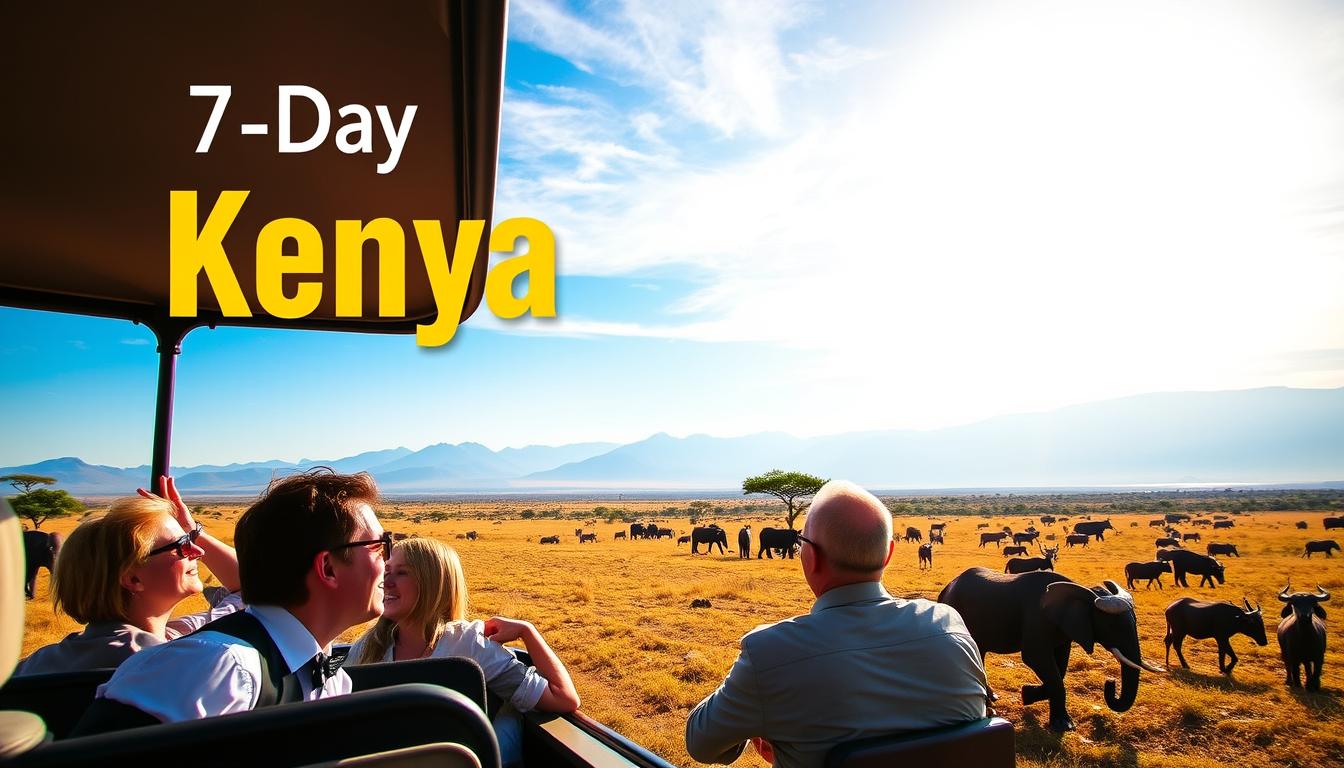
Many dream of exploring East Africa’s natural beauty. Planning a 7-Day Kenya Safari Itinerary is key to a smooth trip. This guide helps you explore iconic landscapes and diverse wildlife with confidence.
We focus on your safety and highlight the region’s most stunning sights. Our advice lets you enjoy the extraordinary sights without worrying about trip details. We aim to make your journey worry-free and memorable.
Key Takeaways
- Comprehensive planning ensures a seamless and secure travel experience.
- Professional guidance helps travelers navigate diverse East African landscapes.
- Safety remains the top priority for all wildlife excursions.
- Structured travel plans allow for greater enjoyment of natural wonders.
- Preparation is the foundation of a successful and stress-free journey.
Planning Your 7-Day Kenya Safari Itinerary
A successful 7-day Kenya safari itinerary balances weather and wildlife goals. With limited time, pick your top spots to avoid feeling rushed. This way, you can enjoy the savanna’s beauty without travel stress.
Choosing the Right Time of Year for Wildlife Viewing
The best time to visit Kenya is from June to October. During this time, the dry weather makes wildlife viewing easier. You’ll see animals gather at water sources and witness the Great Migration.
But, watch out for weather changes. Early planning helps deal with unexpected rain. Think about these when picking your dates:
- June to October: Peak season with dry weather and high wildlife visibility.
- November to May: The “green season,” with lush landscapes and fewer crowds.
- Shoulder Months: A balance of moderate pricing and decent weather conditions.
Understanding the Logistics of a Week-Long Expedition
Managing your Kenya safari cost is key. Costs change based on where you stay, from luxury camps to lodges. Your budget will cover park fees, transport, and guides, so set your priorities early.
To save money and time, think about these logistics:
| Factor | Budget Impact | Planning Tip |
|---|---|---|
| Accommodation | High | Book in advance for better rates. |
| Transport | Medium | Group tours reduce individual costs. |
| Park Fees | Fixed | Check current rates for your specific parks. |
Plan your transport and lodging ahead for a smooth trip. A good plan lets you enjoy Kenya’s beauty while staying within your budget.
Essential Travel Logistics and Preparation
Getting ready for a Kenyan adventure starts with the basics. Tackling the paperwork early lets you enjoy the sights and sounds without stress. These Kenya travel tips will help you get started smoothly.
Visa Requirements and Health Precautions for US Travelers
US travelers to Kenya need an Electronic Travel Authorization (eTA) before flying. This digital visa is a must and should be done early. Staying organized with your documents avoids delays at Jomo Kenyatta International Airport.
For health, see a travel clinic six weeks before your trip. They’ll advise on vaccinations and malaria meds. Also, get travel insurance to cover medical costs or trip cancellations.
Selecting the Best Safari Operators and Transport Options
Choosing a trusted local tour operator simplifies your safari. They know the rules and offer 4×4 vehicles for tough terrain. Plus, they have guides who find the best wildlife spots.
When picking a safari, think about these key points for a good deal:
- Vehicle Quality: Make sure the vehicles are in good shape and have pop-up roofs for better views.
- Expertise: Guides with lots of experience and local knowledge are a must.
- Customization: A good local tour operator will make the trip fit your interests and pace.
- Safety Standards: Check that the company follows safety rules and has good travel insurance.
Professional help turns a trip into an unforgettable journey. With local guides, you’ll explore the vast plains with confidence.
Arrival and Nairobi Wildlife Highlights
Your adventure starts when you land in Nairobi, the lively capital. It’s a big hub for international flights in Africa. Working with a local tour operator makes getting from the airport to wildlife spots easy and worry-free.
Good safari logistics are key for a great first day. Planning ahead helps you avoid travel hassles. This way, you can enjoy the amazing sights Kenya has to offer without stress.
Visiting the Sheldrick Wildlife Trust
The Sheldrick Wildlife Trust is a special place in Kenya. It’s all about helping animals like elephants and rhinos. You can see these amazing animals up close during the daily feeding sessions.
This trust is very important for saving animals in Kenya. It’s a touching experience that shows the big challenges animals face. It’s a great start to your wildlife journey.
Exploring the Giraffe Centre and Nairobi National Park
The Giraffe Centre is where you can feed the Rothschild’s giraffe. It’s a fun place for families and those who love taking pictures. You’ll make unforgettable memories with these gentle giants.
Nairobi National Park is special because it’s in the city. You can see animals like lions, zebras, and buffaloes. A local tour operator helps you see the best spots and manage your time well.
| Attraction | Primary Focus | Best Time to Visit |
|---|---|---|
| Sheldrick Wildlife Trust | Elephant Rehabilitation | Morning (11:00 AM) |
| Giraffe Centre | Conservation Education | Morning or Afternoon |
| Nairobi National Park | Game Viewing | Early Morning |
Journey to the Great Rift Valley and Lake Nakuru
As you leave the capital, the landscape changes dramatically. You enter the vast Great Rift Valley. This geological wonder shows the raw, volcanic history of East Africa. The shift from city to wilderness is a key moment in your journey.
Scenic Drives Through the Rift Valley Escarpment
The drive to the valley floor is breathtaking. You’ll see endless views as you wind through the escarpment. These spots are perfect for taking in the landscape’s grandeur.
Safety is key during these trips. Expert drivers handle the steep roads. With a seasoned guide, you can enjoy the views without worry.
Bird Watching and Rhino Tracking at Lake Nakuru
At the valley floor, you’ll find Lake Nakuru. It’s famous for wildlife viewing, with thousands of flamingos. Their pink color against the water is breathtaking.
The park is also home to endangered rhinos. Seeing them in the wild is a highlight. Spotting a rhino helps you see the Big Five during your safari.
Conservation at Lake Nakuru is critical. By watching wildlife, you help protect the park. Always keep a safe distance to respect the animals.
Exploring the Iconic Maasai Mara National Reserve
The Masai Mara is a place where the wild spirit of nature shines brightly. It’s a vast, golden expanse that contrasts with the bird-filled shores of Lake Nakuru. The Mara is the crown jewel of any East African adventure.
Navigating the Vast Plains of the Mara
The reserve’s vastness can be daunting for newcomers. To fully experience it, you need expert local guides. They know the dirt tracks and the terrain like the back of their hand.
Guides use their knowledge to track animals and navigate the savanna. This way, you spend more time watching wildlife and less time searching for paths. Safety and efficiency are their top priorities.
The Great Migration and Predator Sightings
The Great Migration is a highlight of the Mara. Millions of wildebeest and zebras cross the Mara River, a sight seen in many documentaries. It shows the power of nature.
The Mara is also home to the Big Five. Lions, leopards, and buffalo roam the plains, often near grazing herds. Here’s what you might see during your visit:
| Wildlife Category | Primary Species | Best Viewing Time |
|---|---|---|
| The Big Five | Lion, Leopard, Elephant, Rhino, Buffalo | Early Morning |
| Great Migration | Wildebeest, Zebra, Gazelle | July to October |
| Predator Activity | Cheetah, Hyena, Lion | Late Afternoon |
Responsible tourism is key to protecting the Mara. Keep a safe distance from animals to respect their space. By doing so, you help preserve the Masai Mara for the future.
Immersive Wildlife Tracking and Cultural Encounters
Going on a safari is more than just seeing animals. It’s about diving deep into the culture and nature of East Africa. Walking in the wild gives you a profoundly different perspective on the world.
Those who seek these experiences learn to love nature more. They connect with the environment in a way that lasts long after they leave.
Guided Bush Walks and Off-Road Game Drives
Guided bush walks let you see the small wonders of the wild. Guides teach you to track animals by their footprints and scent. It’s a unique way to see the world.
In the Masai Mara, these walks are a feast for your senses. The sounds and smells of the savanna come alive. Even during the Great Migration, walking offers a rare quiet moment.
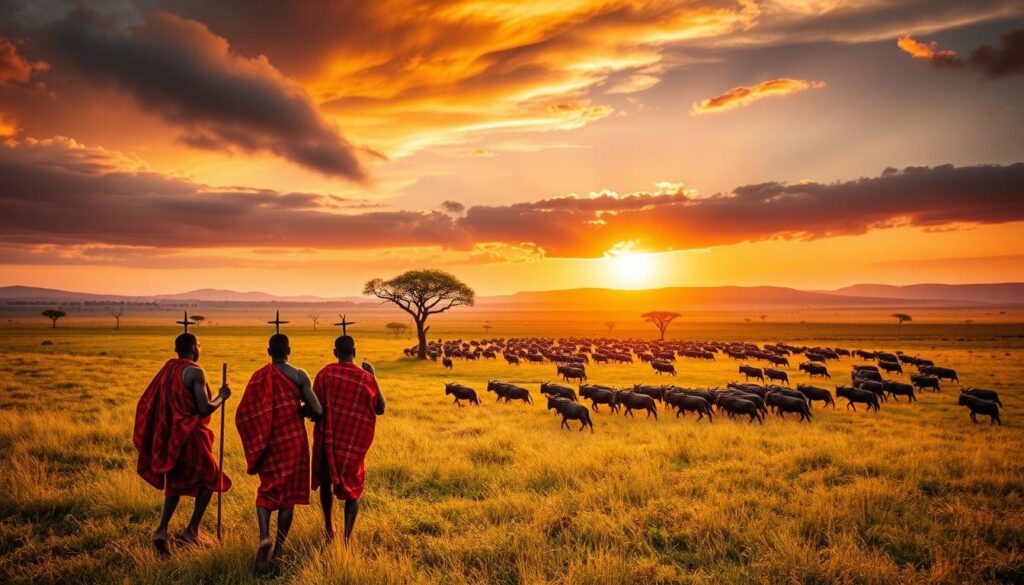
Off-road game drives get you closer to wildlife in safe areas. These drives are led by experts who make sure you see animals up close without disturbing them.
Engaging with Local Maasai Communities
Talking to locals gives you a glimpse into their traditions and history. These meetings are respectful and help support sustainable tourism practices. They empower local families.
You might learn about traditional medicine, cattle herding, and beadwork. These experiences show the deep-rooted relationship between people and wildlife.
It’s important to be respectful and open-minded during these visits. Choosing the right guides ensures your visit helps preserve the culture and habitat of the Masai Mara.
Transitioning to Amboseli National Park
Traveling to the south of Kenya offers a new view of the country’s wildlife. Moving from the Mara’s vast plains to the south needs careful planning. This ensures a smooth and enjoyable trip. You’ll see the unique beauty of Amboseli National Park as you near Tanzania’s border.
Traveling from the Mara to the Southern Plains
The trip between these top spots can be by light aircraft or private car. Flying is the fastest way, cutting down travel time. It lets you spend more time exploring the area.
Driving offers a view of Kenya’s countryside. Make sure your safari company has a reliable car for the long trip. Good transport is key for a smooth journey through these varied landscapes.
Understanding the Unique Ecosystem of Amboseli
Amboseli is known for its amazing elephant population. These elephants roam the plains, often near the swamps. Seeing them in their home is a unique experience.
The park’s dry landscape is different from the north’s green grasslands. Its stunning mountain view is perfect for photos. Amboseli’s unique environment makes it a must-see in Kenya.
Capturing Views of Mount Kilimanjaro
Seeing Mount Kilimanjaro in Amboseli National Park is unforgettable. This mountain adds drama to wildlife photos, making them stand out. It’s hard to find a view like this anywhere else in Africa.
The Best Vantage Points for Mountain Photography
Getting the perfect shot needs planning and local help. Guides know the best spots and when the light is right. Early morning is best, when the clouds clear to show the mountain fully.
For great safari photography, place your car to put the mountain behind your subject. Work with your driver to catch animal movements and match them with the mountain. Waiting for the right light and clear skies is key.
Observing Large Elephant Herds Against the Backdrop
Seeing elephants with Kilimanjaro in the background is a must-see in Kenya. These big animals move slowly, giving you time to take photos. Keep a safe distance to keep them calm and natural.
Focus on the contrast between the elephants’ dark skin and the mountain’s soft blue. Catching their interactions adds emotion to your photos. Always put the animals’ safety first, as a relaxed animal makes for a better photo.
Best Practices for Wildlife Photography and Etiquette
Capturing the beauty of the African wilderness takes patience and the right skills. Safari photography is a great way to document your trip, but always put the animals first. Follow ethical guidelines to keep your presence respectful and unobtrusive.
Camera Gear Recommendations for Safari
Your camera gear should handle different light and distances well. A telephoto lens, from 300mm to 600mm, is key for close-up shots without disturbing animals.
Stability is important when shooting from a moving vehicle. Many Land Cruisers come with beanbags for your camera lens. They’re better than tripods for quick adjustments while tracking animals.
Respecting Wildlife and Maintaining Distance
The main rule of ethical wildlife observation is to keep a safe distance. Never push your driver to get closer if an animal looks upset or is trying to leave. Your guide knows how to position the vehicle for a good view while keeping animals safe.
Remember, you’re a guest in their home. Don’t make loud noises or sudden moves during your safari photography. Being patient and careful helps keep the environment safe for wildlife.
Packing Essentials for a Kenyan Expedition
Packing for Kenya is key to a comfortable safari. Weather can change quickly, so it’s important to be ready for any temperature. Strategic layering helps you stay comfortable from morning to afternoon.
Clothing Choices for Variable Climates
Choose lightweight, breathable fabrics for sun and insect protection. Stick to neutral colors like khaki, tan, or olive green. These colors help you blend in and avoid attracting tsetse flies.
Make sure your packing list includes:
- Lightweight long-sleeved shirts and trousers for sun and insect protection.
- A warm fleece or windbreaker for cool mornings and evenings.
- Comfortable, sturdy walking shoes or boots for bush excursions.
- A wide-brimmed hat and high-quality polarized sunglasses.
Must-Have Gear and Personal Health Kits
Your luggage should have tools for safety and fun. Always carry a personal health kit for minor issues or emergencies in remote areas.
Essential items for your kit include:
- Broad-spectrum sunscreen and high-SPF lip balm.
- Personal prescriptions and basic over-the-counter pain relief.
- Antiseptic wipes and adhesive bandages for small scrapes.
- Insect repellent containing DEET or Picaridin.
Choose soft-sided luggage for safari vehicles with limited space. By packing these packing for Kenya essentials, you’re ready for the savanna’s diverse conditions. You can focus on the amazing wildlife around you.
Conclusion
A seven-day trip across East Africa’s vast plains is unforgettable. Seeing the Great Migration or watching elephants near Mount Kilimanjaro creates lasting memories.
Planning well is key. Knowing the best time to visit Kenya ensures good weather and wildlife sightings. Understanding the cost helps you budget for quality lodges and guides.
Travel insurance is essential for peace of mind. It covers medical needs and travel issues, letting you enjoy your adventure. Reliable insurance is your safety net in remote areas.
Packing right is important for comfort during your trip. The right gear helps you handle changing weather and rough terrain. Now, you’re set for a safe and rewarding journey through Africa’s heart.




6 Comments on “7-Day Kenya Safari Itinerary for an Unforgettable Adventure”