Did you know over 30,000 people visit the Khumbu region each year? You don’t need to be a pro mountaineer to see this amazing place. The everest base camp route is tough, but anyone with good fitness and determination can do it.
This trek is different from climbing Everest. It’s a high-altitude walk, not a climb that needs ropes or ice axes. With a smart plan and acclimatization, you can handle the Himalayas’ thin air safely.
This guide will tell you all about your adventure. We’ll cover planning your route, getting fit, and what gear you need. Whether you’re thinking about everest base camp hiking or booking your trip, our tips will prepare you for an unforgettable journey.
Key Takeaways
- The journey is a high-altitude trek, not a technical climbing expedition.
- Physical fitness and proper training are essential for a successful trip.
- Acclimatization is the most critical factor in avoiding altitude sickness.
- Preparation involves selecting the right gear and understanding the local culture.
- A well-planned itinerary significantly increases your chances of reaching the destination.
Introduction to the Everest Base Camp Trek
Embarking on a mount everest base camp trek is a chance to see the Himalayas’ raw beauty. The journey is more than just reaching the iconic destination. It’s about the transformative experiences along the way.
Travelers often find a deeper connection to nature and themselves. The path itself offers more than the final goal.
Why Trek to Everest Base Camp?
The region’s beauty goes beyond the highest peak. You’ll see lush forests, icy highlands, and iconic bridges. Ancient villages seem frozen in time.
Meeting the local Sherpa communities is unique. Their Buddhist heritage is evident everywhere. For those planning, https://ebctrekguide.com/ provides essential tips.
A Brief History of the Route
The trail has changed a lot. It started as a supply route for climbers. Now, it’s a famous path for adventurers worldwide.
This change balances tourism with protecting the mountain. Today, it shows human curiosity and exploration spirit. It supports local communities, adding profound respect to your journey.
| Feature | Experience Level | Cultural Impact |
|---|---|---|
| Scenery | High | Buddhist Heritage |
| Physicality | Moderate | Sherpa Hospitality |
| Accessibility | High | Historical Significance |
Planning Your Trip
Getting ready for the Everest region is key before you start walking. Good planning makes your trekking to everest base camp safe, fun, and unforgettable. This is true even in the tough mountain terrain.
Best Time to Visit Everest Base Camp
Picking the right season is important for clear views and good weather. The best times are spring (March to May) and autumn (late September to November).
- Spring: It’s warmer and rhododendrons bloom, but clouds can come in the afternoon.
- Autumn: It has the clearest views and stable weather, making it the most popular time.
Mountain weather is always changing. You might see sunshine in the morning and then wind or cold by midday. Always wear layers.
How Long is the Trek?
A standard pace takes 12 to 14 days. This includes days to get used to the thin air at high altitudes.
Adding two extra days is smart for flight delays or bad weather. For inspiration, check out a 7-day Kenya safari itinerary to see how planning can make your trip better.
Getting to Kathmandu
Kathmandu is where most people start. From there, you’ll usually fly to Lukla to start your trek.
Flights to Lukla might leave from Manthali Airport in peak seasons. This means a 4-to-5-hour drive from Kathmandu first. Being flexible is key because mountain weather can change flights. Always plan extra time for a smooth start to your base camp trek.
Understanding the Route
Completing the mt everest base camp trek requires knowing the trails of the Khumbu region. It’s not just walking; it’s climbing through different landscapes. You’ll see lush valleys and the icy beauty of the high Himalayas.
Overview of the Trekking Route
Adventurers start with a flight to Lukla, a mountain airstrip. The trail goes through the Dudh Koshi River valley. You’ll see Sherpa villages and dense forests.
As you climb higher, the scenery changes. The air gets thinner. The route helps your body get used to the lower oxygen levels.
You’ll spend days in lower settlements before reaching high altitudes. This slow pace is key for safety and success.
Key Stops Along the Way
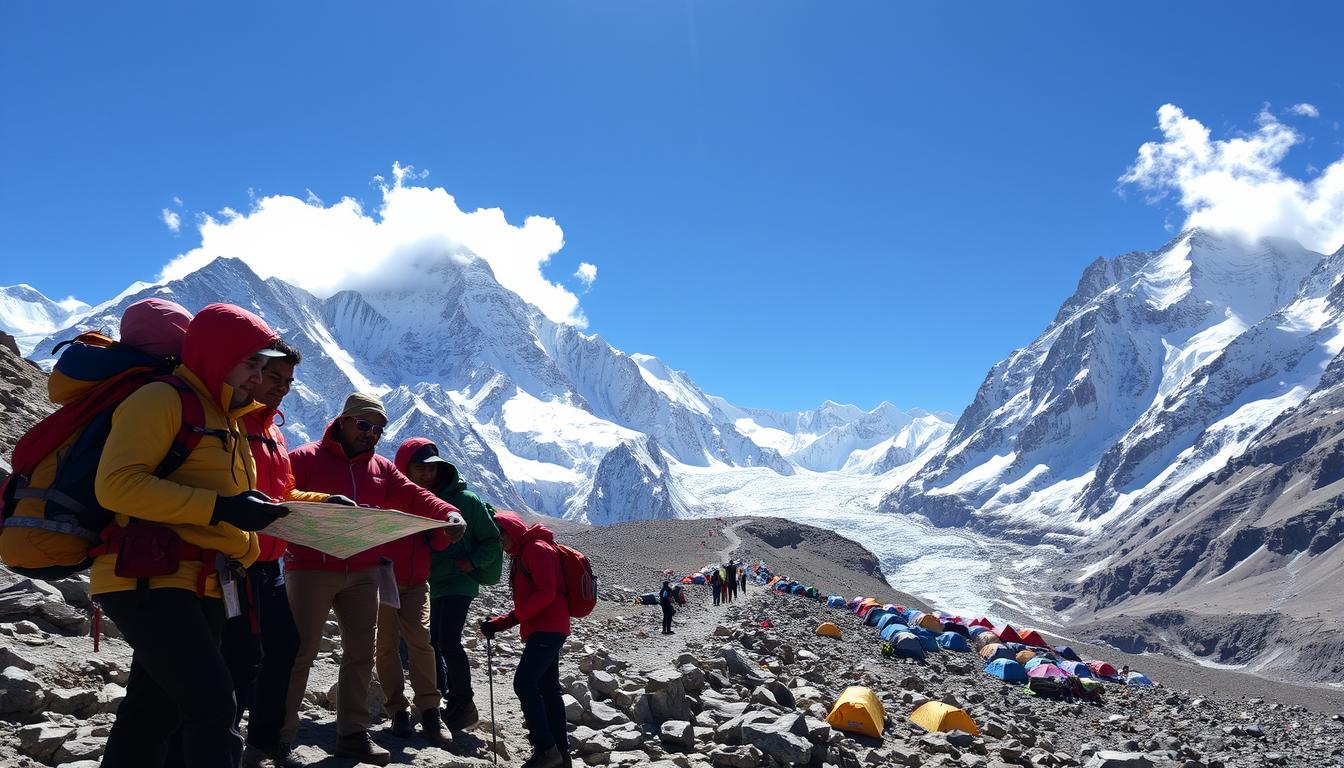
Several places are key on the mt everest base camp trek. Each stop offers cultural insights and rest.
- Namche Bazaar: A bustling hub for gear checks and acclimatization.
- Dingboche: A village with stunning views and important for altitude adjustment.
- Lobuche and Gorakshep: Near massive glaciers, these settlements are close to the base camp.
- Kala Patthar: Famous for its panoramic views of Everest.
Alternate Routes to Consider
Experienced trekkers might take different paths for a unique view. These routes offer new perspectives and can avoid crowds.
| Route Option | Primary Benefit | Difficulty Level |
|---|---|---|
| Classic Route | Direct and well-supported | Moderate |
| Gokyo Lakes | Stunning turquoise water views | Challenging |
| Cho La Pass | High-altitude glacier crossing | Very Strenuous |
Some prefer a helicopter return from Gorakshep or Pheriche. It saves time and offers a bird’s-eye view of the trek. The journey tests endurance but is rewarding.
Trek Difficulty and Trail Conditions
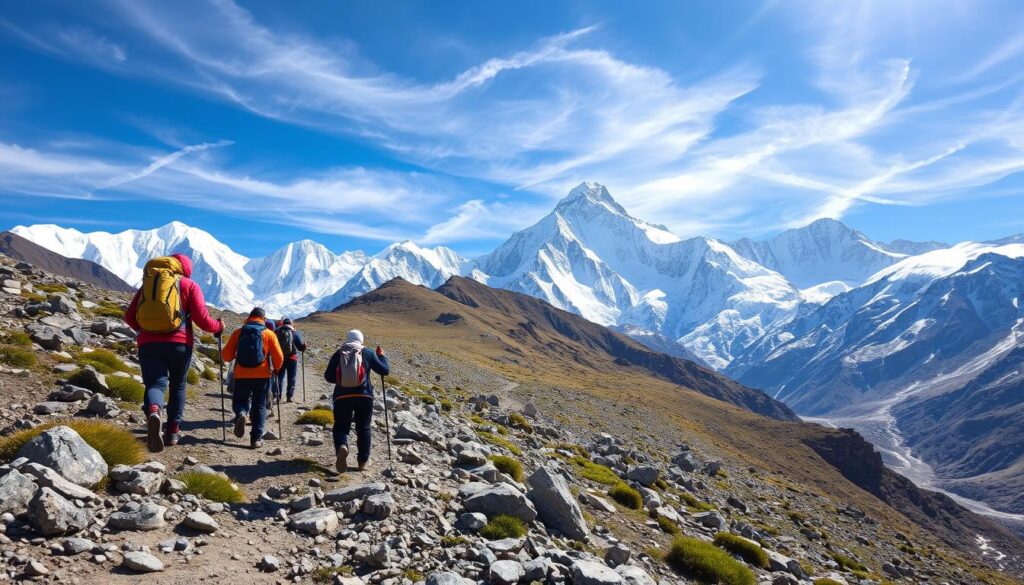
The journey to the highest peak is more about endurance than technical skills. Mount Everest Base Camp trekking is a long hike that needs patience and physical readiness. It doesn’t require specialized climbing abilities.
Fitness Level Required
Success on this trail depends on your heart health and leg strength. You don’t need to be an elite athlete. But, you should be okay with walking for hours each day with a light pack.
To get ready, try these training tips:
- Do stair climbing weekly to build endurance.
- Hike on uneven terrain to strengthen your ankles and stabilizer muscles.
- Do regular aerobic exercises like cycling or swimming to boost lung capacity.
Training with a loaded daypack helps prepare your body for the trek. This ensures you’re ready for the effort needed on your mount everest base camp trekking journey.
Weather Conditions to Expect
The high-altitude environment is unpredictable and can change quickly. As you go higher, the air gets thinner. This can cause fatigue, disrupted sleep, and a reduced appetite.
“The mountains are calling, and I must go, but one must respect the power of the altitude to truly enjoy the journey.”
Temperatures can drop sharply between sunny days and cold nights. Be ready for cold winds and sudden changes in visibility, common at high altitudes.
Terrain and Trail Challenges
The trail offers a variety of surfaces that test your focus and balance. You’ll see everything from stone stairways to dusty scree slopes that need careful steps.
Some challenges you might face include:
- Narrow suspension bridges over deep river gorges.
- Rocky, uneven paths that require constant attention to your footing.
- Steep inclines that feel harder due to the lack of oxygen.
Mental resilience is as important as physical strength when facing these obstacles. By walking slowly and steadily, you help your body adjust to the environment. This makes the journey safer and more enjoyable.
Essential Gear for the Trek
Choosing the right equipment is key for anyone climbing to everest base camp. Your gear affects your comfort, safety, and success. It’s better to have quality over quantity, whether you carry your own pack or hire a porter.
Clothing and Footwear Recommendations
A versatile layering system is the secret to comfort in the Himalayas. Instead of one heavy jacket, pack thin layers. This lets you adjust to changing temperatures.
Your footwear is critical. Choose broken-in, waterproof trekking boots with good ankle support. Pair them with moisture-wicking socks to avoid blisters and keep your feet dry.
Must-Have Gear for Your Pack
Some items are essential for a safe climb to everest base camp. A warm, four-season sleeping bag is key for cold nights. Also, don’t forget these daily pack essentials:
- Trekking poles: They help with knee strain on long descents.
- Sun protection: High-altitude UV rays are strong, so pack polarized sunglasses and high-SPF sunscreen.
- Power bank: Charging outlets can be rare or expensive, so a reliable battery pack is a must.
- Buff or neck gaiter: It protects your face from dust and cold winds.
Optional Items to Enhance Your Experience
While keeping your pack light is important, some extra items can make your trip better. A lightweight travel pillow, journal, or deck of cards can offer relaxation. Many also bring electrolyte powder to stay hydrated.
Before you pack, check the baggage weight limits with your trekking company or airlines. If using a porter, make sure your bag is durable and water-resistant. This balance ensures you stay agile and ready for challenges.
Health Considerations During the Trek
Your health is key on the everest base camp trek. High altitudes need careful planning and knowing how your body handles thin air. Always talk to a doctor before you go to discuss your health, any medicines, and what to do in an emergency.
Acclimatization Strategies
Getting used to less oxygen at high places is called acclimatization. It takes time for your body to adjust. Gradual ascent is the best way to avoid altitude sickness.
Rest days are not just for sitting. They’re for active acclimatization. Short, easy hikes to higher places before coming back down to sleep help. This “climb high, sleep low” method is effective for the everest base camp trek.
Common Health Issues and How to Avoid Them
Acute Mountain Sickness (AMS) is a big worry. It can cause headaches, nausea, dizziness, and tiredness. But, knowing the difference between mild and severe symptoms is important.
If you have vomiting, confusion, or trouble breathing, descend immediately and get medical help. The “Khumbu cough” is another issue, caused by cold, dusty air. Wearing a buff or scarf can help warm and moisten the air you breathe.
- Sun Protection: Use high-SPF sunscreen and polarized sunglasses to prevent snow blindness and skin damage.
- Nutrition: Eat balanced meals rich in carbohydrates to maintain energy levels.
- Sleep: Prioritize rest, as your body performs vital recovery work while you sleep.
Staying Hydrated on the Trail
Drinking enough water is essential on the everest base camp trek. At high altitudes, you lose moisture faster. Aim to drink three to four liters of water a day.
Stay away from too much caffeine or alcohol, as they can dehydrate you. Drink water, herbal teas, or electrolyte drinks to keep hydrated. Staying hydrated helps your blood carry oxygen to your muscles, important for the long days ahead.
Choosing a Trekking Guide or Company
Choosing a trekking operator is key to a safe and successful trip. While you can travel alone, high-altitude places often need professional help. This ensures your safety on the mount everest base camp trek.
Benefits of Hiring a Guide
An experienced guide is your main support on the trail. They know how to spot altitude sickness and manage your pace. They also keep an eye on the weather.
Guides help with the logistics and emergency plans. This lets you enjoy the views without worry. They also help you understand local cultures, making your trip more meaningful.
Tips for Selecting a Reliable Trekking Company
Look for a company that values safety and transparency over low prices. A good company will show you their evacuation procedures and guide qualifications. Make sure they have the right permits and treat their porters well.
Check what other travelers say about the company. Choose one with small groups for better service. A good company will answer your safety questions before you book the mount everest base camp trek.
Understanding Costs and What’s Included
Plan your budget carefully. Be cautious of very cheap deals that might miss important services. Ask for a detailed list of costs to avoid surprises.
| Service Category | Standard Inclusion | Potential Exclusion |
|---|---|---|
| Logistics | Permits and Transport | International Flights |
| Support | Certified Guide/Porter | Personal Tips |
| Safety | First Aid/Oxygen | Evacuation Insurance |
| Comfort | Lodging and Meals | Alcohol/Snacks |
Make sure your agreement includes all necessary permits, gear, and insurance. A clear agreement means a worry-free experience on your mount everest base camp trek.
Accommodation Options
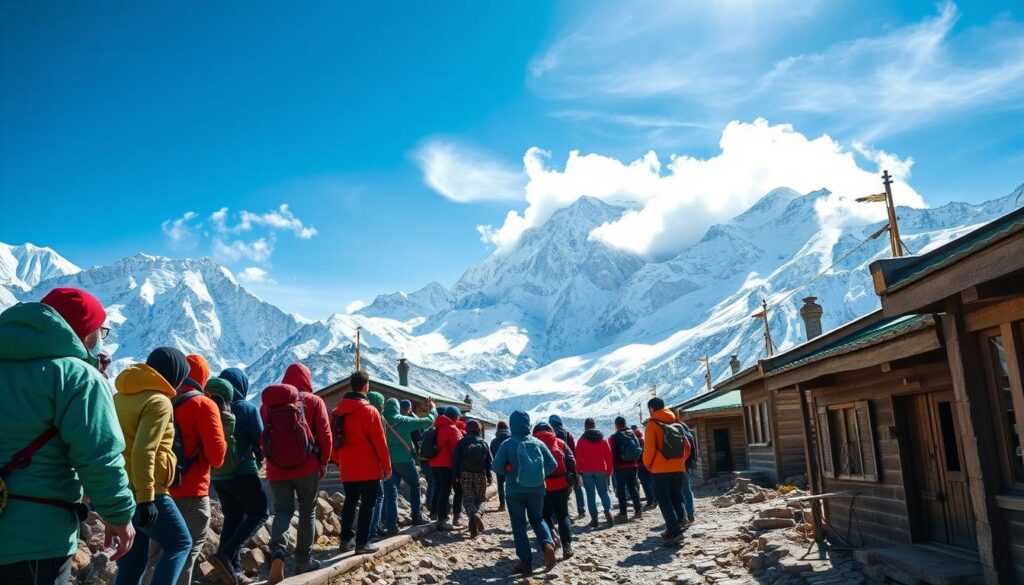
Finding the right place to rest is key on your journey to climbing to everest base camp. The lodging in the Himalayas changes as you go up. You’ll find cozy guesthouses at lower elevations and simple shelters at higher ones.
Types of Lodging in the Region
At the start, you’ll find modern lodges with private rooms and sometimes bathrooms. These places offer comfort before the trail gets tough.
As you climb higher, the lodges change. You’ll stay in family-run tea houses. These are built to withstand the mountain weather, focusing on function over luxury.
What to Expect in Tea Houses
Tea houses are your home and social spot on the trek. Rooms are simple, with two beds and basic mattresses. You should expect a rustic environment with a central stove for warmth.
Shared facilities and hot water may cost extra. Electricity for charging is available in the dining hall for a fee. Be flexible, as these places focus on necessity over comfort.
Best Practices for Staying Comfortable
To stay rested on your journey, prepare well. A good sleeping bag liner adds warmth and hygiene. Keep your gear organized in waterproof bags for small, shared spaces.
- Protect your electronics: Keep batteries close to your body or inside your sleeping bag to prevent them from draining in the cold.
- Stay dry: Always change into dry base layers immediately upon arriving at the tea house to prevent chills.
- Manage your items: Use a headlamp for navigating rooms at night, as lighting can be dim or non-existent.
| Feature | Lower Elevation | High Altitude |
|---|---|---|
| Room Type | Private/Shared | Basic Twin |
| Bathroom | Attached/Shared | Communal |
| Heating | Minimal | Dining Area Only |
| Charging | Available | Paid Service |
Cultural Insights and Local Customs
The Everest region is known for its vibrant culture and towering peaks. When trekking to Everest Base Camp, you’ll see how the landscape and local people’s lives are connected. Showing respect and curiosity makes the trek a meaningful experience.
Understanding Sherpa Culture
The Sherpa people are the heart of the Khumbu region. They have a rich heritage that goes beyond their mountaineering skills. Their culture, influenced by Tibetan Buddhism, shapes their architecture and daily life. It’s important to see their culture as alive, not just a backdrop for tourists.
The Sherpa people’s warmth and hospitality are unforgettable. By respecting their traditions, you honor the community that has lived in these valleys for generations.
Important Etiquette While Trekking
When you’re on the trails, knowing local customs is key to being respectful. Treat religious sites and objects with reverence. Your behavior around them should show respect.
- Mani Walls and Stupas: Always pass to the left of mani walls, prayer wheels, and chortens to follow the clockwise tradition.
- Monasteries: Remove your hat and shoes before entering, and always ask for permission before taking photographs inside.
- Prayer Flags: Treat these symbols of peace with care; never step on or disrespect them.
- Trail Right-of-Way: Always yield to pack animals and porters by moving to the uphill side of the trail to avoid accidents.
Engaging with Local Communities
Responsible Everest Base Camp hiking means helping preserve the environment and local economy. Small actions can make a big difference in the villages you visit.
Here are some ways to support the local community:
- Support Local Businesses: Choose locally-owned tea houses and purchase goods from village shops to keep resources within the community.
- Minimize Waste: Carry out all non-biodegradable trash and avoid single-use plastics whenever possible.
- Learn Local Phrases: A simple “Namaste” goes a long way in building rapport with your hosts and guides.
- Dress Modestly: Respect local norms by wearing modest clothing, specially when visiting villages or religious sites.
By following these guidelines, you help ensure the region’s future. Your mindfulness helps preserve the Himalayas for residents and future travelers.
What to Expect on Trek Day
Life on the trail is both predictable and rewarding. It keeps trekkers moving forward. Knowing the journey’s flow is key to your mt everest base camp trek prep.
Daily Routine on the Trail
Mornings start early with tea and a big breakfast. You’ll learn to wear layers for the cold mornings and hot sun. Consistency is your best friend; walk slowly to get used to the thin air.
By mid-afternoon, you’ll reach a tea house. It’s a great time to rest, drink water, and get ready for tomorrow. Patience is essential at high altitudes.
Meals During the Trek
Your hunger might change with altitude. Stick to carbs like porridge, pasta, and rice for energy. Staying well-fed is key for success on the mt everest base camp trek.
Drink lots of water all day. Even if you don’t feel hungry, eat simple snacks to keep your energy up. Listen to your body and choose foods that are easy to digest.
Capturing the Experience: Photography Tips
The Himalayas are stunning, but harsh on cameras. Keep batteries warm to avoid quick drain. Protect your gear from dust and moisture for better performance.
Be careful of snow glare and changing light. Take your time to find the best shots. Respectful portraits of locals should always be asked with a smile, making your memories kind and beautiful.
Safety Precautions
Safety is key when you start a mount everest base camp trekking adventure. The Himalayas are stunning, but they need your careful attention and preparation. Your well-being is at stake, so plan ahead and know the mountain rules.
Emergency Procedures on the Trek
Guides watch over you closely on the trek. If you feel sick, like headaches or nausea, tell your guide right away. Early detection helps avoid serious problems.
If there’s a medical emergency or bad weather, your guide will act fast. They might take you down or call for a helicopter rescue. Always listen to your guide, as they know what to do to keep you safe.
Insurance Considerations
Getting good travel insurance is a must. Make sure it covers high-altitude trekking and helicopter evacuations. Regular insurance might not cover these, so check the details.
Your policy should also cover trip delays and lost bags. But remember, insurance is a backup, not a replacement for smart choices or acclimatization. It’s there to protect your wallet, not replace medical advice or your guide’s expertise.
| Coverage Feature | Why It Is Essential | Verification Tip |
|---|---|---|
| Helicopter Evacuation | Rapid transport to medical facilities | Check altitude limits |
| Medical Expenses | Covers hospital and doctor fees | Confirm no “trekking” exclusion |
| Trip Interruption | Reimburses non-refundable costs | Review policy trigger events |
| Search and Rescue | Covers costs of mountain rescue | Ensure it covers remote areas |
Communication Options
Staying in touch on a mount everest base camp trekking trip needs some planning. Local SIM cards work in many places, but service can be spotty. Tea houses might have Wi-Fi, but it’s not reliable for important calls.
Bring a good power bank to keep your devices charged. Electricity can be hard to find or expensive. Make a plan with your family before you go. This way, they’ll know how to reach you while you’re trekking.
Conclusion: Your Journey Awaits
Starting a base camp trek is a big step. It tests your physical and mental strength. You must respect the environment, prepare well, and understand the challenges of the Himalayas.
Reflecting on the Experience
Reaching the end is a big achievement. But the real journey is in the daily steps. You’ll see Sherpa culture, stunning views, and find your inner strength.
Success comes from a slow and steady plan. Stay hydrated and watch your health closely. This keeps you safe on the trek.
Guidance for Future Trekkers
Getting ready is more than just getting fit for the terrain and cold. Make sure you have good travel insurance and the right gear. For those looking to travel with confidence, research is key.
Be patient and respect the local people. Your responsible travel helps keep these beautiful places for future visitors.
Do I need a visa for the mount everest base camp trek?
Is it possible to do the everest base camp trek without a guide?
How much does it cost to go trekking to everest base camp?
Do I need a visa for the mount everest base camp trek?
Yes, most travelers require a visa to enter Nepal. These can usually be obtained upon arrival at Tribhuvan International Airport in Kathmandu. Ensure your passport has at least six months of validity remaining.
Is it possible to do the everest base camp trek without a guide?
While experienced hikers have historically trekked solo, the Nepal government has introduced regulations regarding mandatory guiding in certain regions for safety. Even if permitted, hiring a guide is highly recommended for managing logistics, safety, and cultural translation.
How much does it cost to go trekking to everest base camp?
Costs vary depending on the level of service and duration, but a standard 14-day base camp trek usually ranges between
Do I need a visa for the mount everest base camp trek?
Yes, most travelers require a visa to enter Nepal. These can usually be obtained upon arrival at Tribhuvan International Airport in Kathmandu. Ensure your passport has at least six months of validity remaining.
Is it possible to do the everest base camp trek without a guide?
While experienced hikers have historically trekked solo, the Nepal government has introduced regulations regarding mandatory guiding in certain regions for safety. Even if permitted, hiring a guide is highly recommended for managing logistics, safety, and cultural translation.
How much does it cost to go trekking to everest base camp?
Costs vary depending on the level of service and duration, but a standard 14-day base camp trek usually ranges between $1,500 and $3,000 USD. This typically includes permits, domestic flights, accommodation, and meals, but excludes international airfare and insurance.
What is the highest point of the everest base camp hiking route?
While Everest Base Camp sits at approximately 5,364 meters (17,598 ft), most trekkers also climb Kala Patthar, which reaches an elevation of 5,545 meters (18,192 ft) for the best views of the Everest summit.
Can I get altitude sickness on the mt everest base camp trek?
Yes, altitude sickness is a real risk for anyone climbing to everest base camp. It is essential to follow a slow itinerary, stay hydrated, and communicate any symptoms like headaches or dizziness to your guide immediately.
Is there internet access on the mount everest base camp trek?
Yes, many tea houses offer Wi-Fi through the Everest Link service for a fee. The connection can be slow and may be affected by the weather. Purchasing a local SIM card in Kathmandu is another option for lower elevations.
What should I eat to stay healthy while trekking to everest base camp?
It is widely recommended to eat Dal Bhat, as it is fresh, nutritious, and provides long-lasting energy. Many trekkers avoid meat at higher altitudes because it is often carried up by porters without refrigeration and may not be fresh.
,500 and ,000 USD. This typically includes permits, domestic flights, accommodation, and meals, but excludes international airfare and insurance.
What is the highest point of the everest base camp hiking route?
While Everest Base Camp sits at approximately 5,364 meters (17,598 ft), most trekkers also climb Kala Patthar, which reaches an elevation of 5,545 meters (18,192 ft) for the best views of the Everest summit.
Can I get altitude sickness on the mt everest base camp trek?
Yes, altitude sickness is a real risk for anyone climbing to everest base camp. It is essential to follow a slow itinerary, stay hydrated, and communicate any symptoms like headaches or dizziness to your guide immediately.
Is there internet access on the mount everest base camp trek?
Yes, many tea houses offer Wi-Fi through the Everest Link service for a fee. The connection can be slow and may be affected by the weather. Purchasing a local SIM card in Kathmandu is another option for lower elevations.
What should I eat to stay healthy while trekking to everest base camp?
It is widely recommended to eat Dal Bhat, as it is fresh, nutritious, and provides long-lasting energy. Many trekkers avoid meat at higher altitudes because it is often carried up by porters without refrigeration and may not be fresh.