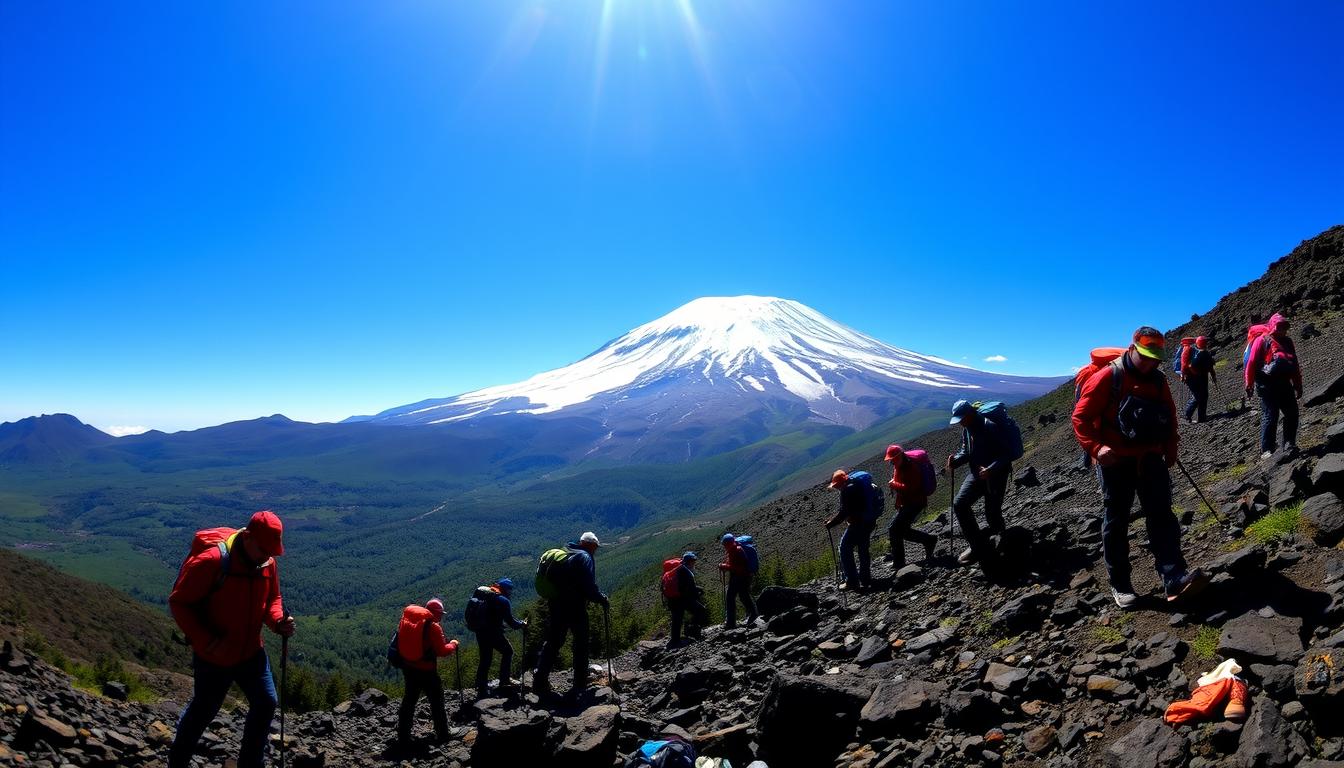
Did you know nearly half of all climbers fail to reach the summit? This is not because of the terrain. It’s because of the thin air at 5,895 meters.
Understanding mount kilimanjaro difficulty means knowing the difference between physical effort and adapting to high altitude. You don’t need ropes or harnesses. But, the extreme altitude is a challenge for even the most experienced athletes.
Many active adults make it to the top by pacing themselves and acclimating properly. Fitness is key, but it can’t remove all risks of high-altitude travel. Figuring out your kilimanjaro hike difficulty is about matching your stamina with the mountain’s environment.
By getting your body and mind ready, you can face the kilimanjaro difficulty with confidence. The best way to ensure a safe and rewarding trip is through careful planning.
Key Takeaways
- The mountain is a non-technical trek that does not require specialized climbing gear.
- Altitude sickness is the most common reason climbers fail to reach the summit.
- Physical fitness is vital, but it does not guarantee immunity to altitude-related issues.
- Slow, steady pacing is the most effective strategy for successful acclimatization.
- Preparation should focus on cardiovascular endurance and mental resilience.
Understanding Kilimanjaro’s Challenge
Many people think climbing Kilimanjaro is easy because it’s a “walk-up” mountain. But, the truth is more complex. You don’t need ropes or special climbing gear. Yet, the kilimanjaro hike difficulty is often misunderstood.
Overview of Kilimanjaro Hike Difficulty
The main challenge of kilimanjaro difficulty is the high altitude. As you climb through five different climate zones, the air gets thinner. This makes it harder for your body to get enough oxygen.
The hike also involves long, hard days walking. The final climb to the summit is very tough. It starts at night and you aim to reach the top by sunrise. This test your physical strength and mental toughness.
Key Factors Influencing Difficulty
Several things can make your climb harder. The length of your trip, the total height you climb, and the weather are all important. These factors can greatly affect your success.
The terrain and carrying a heavy backpack also add to the challenge. Plus, getting tired from walking every day makes the last climb seem even harder.
| Factor | Impact Level | Primary Concern |
|---|---|---|
| Altitude | Very High | Oxygen saturation |
| Itinerary Length | High | Acclimatization time |
| Terrain | Moderate | Joint stress |
| Weather | High | Temperature drops |
Popular Routes and Their Challenges
There are different ways to climb Kilimanjaro, each with its own level of difficulty. Some paths are faster, but this can increase the risk of altitude sickness. Others are slower, which helps your body adjust better.
Choosing the right path is key to managing the climbing mt kilimanjaro difficulty. Every route has its own challenges, from steep slopes to long trails through rainforests. This means no two climbs are the same.
Fitness Requirements for Climbing
Getting ready for Mount Kilimanjaro’s climb means focusing on endurance, not speed. Many are concerned about the kilimanjaro hike difficulty. But, success often comes from keeping a steady pace over several days. Wondering if you’re up for the challenge? You can check your fitness level before booking your trip at this helpful guide.
Recommended Fitness Levels
You don’t have to be an athlete to reach the summit. But, having a strong heart is key for tackling the climbing kilimanjaro difficulty. For beginners, being able to run five kilometers easily is a good start. Also, being able to hike ten kilometers on different terrains will help prepare your body for the long days ahead.
Training Tips for Preparation
Training should be gradual to avoid injuries. Focus on hill work to get used to the mountain’s steep parts. Building leg and core strength will help with uneven paths. It’s also good to practice walking with a heavy pack to get your shoulders and back ready for the daily gear.
Realistic Expectations for Beginners
Not having trekking experience before doesn’t mean you can’t make it to the top. What matters most is your mental and physical consistency during the journey. By walking slowly and steadily, your body can adjust to the changing environment. Remember, the kilimanjaro hike difficulty is doable for most active travelers who prepare well and listen to their guides. Stay patient, keep moving, and trust your training to take you to the summit.
The Impact of Altitude on Climbing
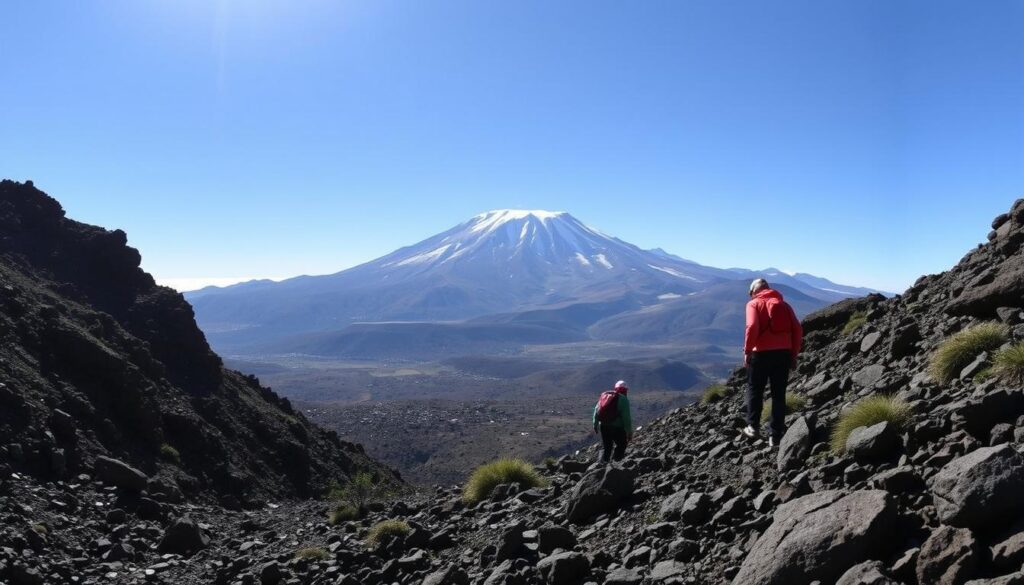
The main factor affecting mount kilimanjaro climb difficulty is the change in air pressure as you go up. Even top athletes can find it tough when oxygen levels drop at high altitudes.
How Altitude Affects Your Body
Going higher, the air gets thinner. This means each breath has less oxygen. Your body has to work harder to get oxygen to your muscles and organs, leading to faster heart rates and breathing.
Many think only unfit people get altitude sickness. But, physiological responses to altitude are highly individual. Even top hikers can get symptoms if they push too hard, too fast.
“The mountain decides who reaches the summit, and the mountain demands respect for the thin air above the clouds.”
Recognizing Acute Mountain Sickness (AMS)
Acute Mountain Sickness (AMS) is a big challenge for hikers. It’s important to know the difference between mild symptoms and serious ones.
- Mild symptoms: Headaches, fatigue, nausea, and trouble sleeping.
- Severe symptoms: Persistent vomiting, confusion, loss of coordination, or trouble breathing while resting.
Many climbers use pulse-oximeter readings to check their health. But, your physical symptoms are a much more reliable indicator of your condition than a device. If you feel bad, tell your guide right away.
Tips for Acclimatization
To manage the kilimanjaro hike difficulty, climb slowly and steadily. A seven-day or longer itinerary helps your body adjust better.
Here are key practices to stay safe:
- Move “pole pole”: This Swahili phrase means “slowly, slowly,” and it’s the key to climbing.
- Hydration and Nutrition: Drink lots of water and eat regular, nutritious meals to keep your body fueled.
- Listen to your body: If symptoms get worse, the best thing to do is stop or go down to a lower altitude.
For more on the trek’s challenges, check out how hard is it to climb by reading expert advice on pacing and safety. Remember, reaching the summit is a goal, but coming back safely is what truly matters.
Choosing the Right Climbing Route
Choosing the right route is key to a successful climb. Each route has its own challenges, like terrain and altitude. These factors greatly affect your climb.
Knowing the differences between routes is important. Pick a route that fits your fitness and experience. This will help you reach the summit safely.
Comparing Route Difficulties
The kilimanjaro hike difficulty depends on the terrain and how fast you climb. The Marangu route is easier but gets crowded. The Northern Circuit is less crowded and slower.
Getting used to the altitude is critical. Routes that let you climb high and sleep low are safer. This helps your body adjust to the thin air.
Duration and Its Effect on Difficulty
Time is a big factor in the climbing mt kilimanjaro difficulty. Shorter trips may save time but are riskier. Longer trips give your body more time to adjust.
Adding a day or two makes the climb easier. It’s safer to go slow than fast. Prioritizing safety over speed is wise.
Scenic Routes vs. Challenging Routes
The Lemosho and Machame routes offer great views and are easier. They’re good for beginners. They let your body adjust better.
The Umbwe route is very steep and challenging. It’s less crowded but risks altitude sickness. It’s for the very fit and confident.
| Route Name | Difficulty Level | Scenery | Recommended Duration |
|---|---|---|---|
| Lemosho | Moderate | Excellent | 7-8 Days |
| Machame | Moderate/High | Very Good | 6-7 Days |
| Umbwe | Very High | Good | 5-6 Days |
| Marangu | Moderate | Average | 5-6 Days |
Your choice should match your goals and fitness. Whether you focus on the mount kilimanjaro hike difficulty or the views, picking the right route is key to success.
Gear and Preparation Essentials
Getting ready for Mount Kilimanjaro starts long before you hit the trail. Choosing the right gear is key to staying comfortable and safe. You’ll go through five different climates, and good equipment helps your body handle the high altitudes.
Must-Have Gear for Your Trek
For a successful trip, you need the right tools. Trekking poles help ease the strain on your knees, which is important on the long way down. A good hydration system, like a three-liter bladder, keeps you drinking water all day.
Good sleeping gear is also essential for rest. A four-season sleeping bag keeps you warm even when it’s freezing. Don’t forget these items for your backpack:
- High-SPF sunscreen and lip balm to protect against intense UV rays.
- A headlamp with extra batteries for early morning summit attempts.
- A durable, waterproof duffel bag for your porters to carry.
Layering for Weather Conditions
Adapting to changing weather is key. Instead of one heavy jacket, use a flexible layering system. This lets you adjust your clothes quickly as you move from the rainforest to the summit.
Begin with a moisture-wicking base layer to keep sweat off your skin. Then, add a mid-layer like fleece or down to keep warm. Always carry a waterproof shell to shield you from wind and rain.
Importance of Proper Footwear
Your feet are vital on the mountain. Wearing broken-in, waterproof hiking boots is a must to avoid blisters. Make sure your boots support your ankles well, as the terrain can be rough.
Choose your footwear wisely for the descent. Tired legs and less coordination can cause slips. Boots with good traction are essential. Comfort and stability make the climb easier and safer.
The Role of Guided Tours
The mountain itself doesn’t change, but the quality of your support team does. Many climbers look for low costs, but this can be risky. Professional leadership is key to handling the kilimanjaro hike difficulty safely.
Benefits of Professional Guides
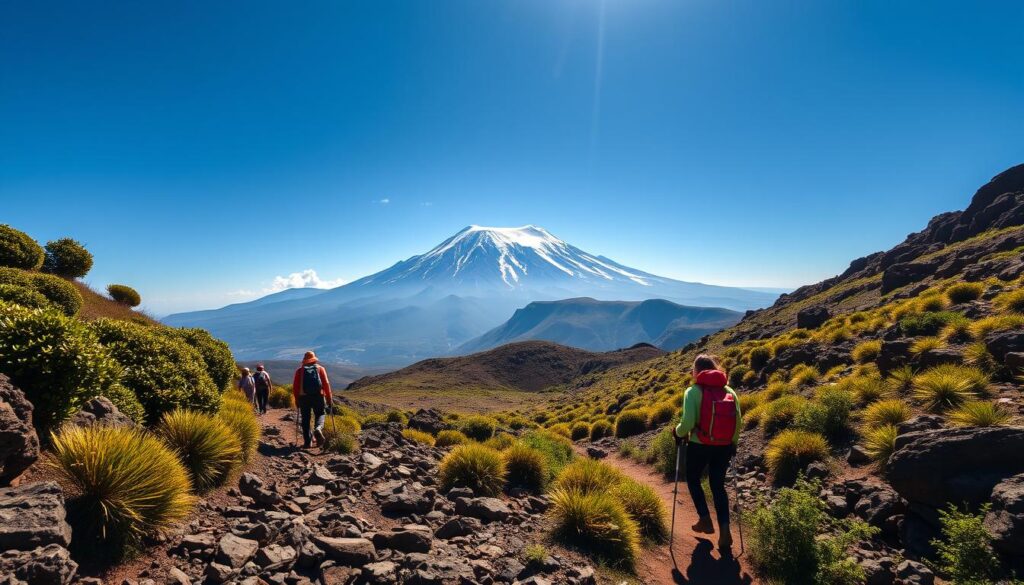
Expert guides do more than just show the way. They are your main safety support. They watch your health every day to make sure you adjust to the thin air.
Professional judgment is critical in deciding if you should keep climbing or go down to avoid altitude sickness.
A good guide knows the secret to success: “pole pole,” or slow walking. They control your pace to save your energy for the summit. You might also want to check out a 7-day Kenya safari itinerary for an unforgettable adventure to go with your climb.
Overview of Tour Options
Tour operators vary from cheap group treks to expensive private trips. Cheap options might not prioritize your safety. But, high-end operators invest in:
- Comprehensive guide training and certification.
- Top-notch, weather-resistant camping gear.
- Fair wages and ethical treatment for porters.
- Nutritious, high-calorie meals.
Safety Measures Provided by Guides
When choosing a tour, safety is the most important thing. Guides can’t stop altitude sickness, but they can lower risks. Good companies use pulse oximeters for health checks and carry emergency oxygen.
They also have clear plans for emergencies. They are open about their safety records and how they treat porters. Choosing a reputable operator means you’re with a team that puts your health first.
Mental and Emotional Preparedness
The journey to the summit is not just about physical strength. It also requires a strong mindset. Climbers need to prepare their minds as much as their bodies for the kilimanjaro hike difficulty. Success on the mountain depends on your mental strength as much as your physical fitness.
Building Mental Resilience
Building mental toughness means listening to your body. It’s about being patient and consistent during long days of trekking. Break the climb into small goals to stay focused.
Focus on the next step or the next rest stop. This keeps your mind in the present. It helps manage the mount kilimanjaro difficulty by avoiding feelings of overwhelm. Every step is a victory, no matter how slow.
Handling Fear and Anxiety on the Trail
Summit night is the toughest part. The darkness, cold, and thin air can make you anxious. Controlled breathing helps keep your heart rate steady and your mind calm.
If you feel overwhelmed, talk to your guides. They can help you stay calm. Trusting your guides and the process is key to keeping your mind clear.
Staying Motivated During the Hike
Staying motivated needs a positive outlook and realistic goals. It’s normal to doubt yourself, but don’t let it stop you. Positive talk with your fellow trekkers helps build a supportive group.
The table below shows how to manage your mind during different stages of the climb:
| Climb Stage | Mental Focus | Recommended Strategy |
|---|---|---|
| Early Days | Pacing | Maintain a slow, steady rhythm. |
| Mid-Altitude | Acclimatization | Focus on hydration and deep breathing. |
| Summit Night | Resilience | Break the climb into small, hourly goals. |
| Descent | Awareness | Stay alert and enjoy the accomplishment. |
Your mental preparation is the base of your physical efforts. By staying present and kind to yourself, you boost your chances of reaching the top safely and enjoying the journey.
Real-Life Experiences from Climbers
Success on the mountain is more than just being fit. It’s about patience, teamwork, and staying mentally strong. Many find that the biggest challenge isn’t the steep trails. It’s getting used to the thin air over days.
Success Stories and Challenges Faced
Guides say the best climbers take it slow. Rushing can lead to exhaustion or altitude sickness, forcing early returns.
Good food and water are key. Without enough calories, energy drops, making the climb harder than it seems.
“The mountain does not care about your marathon times; it only cares about your ability to listen to your body and respect the altitude.”
Tips from Experienced Climbers
Learning from summit-goers is priceless. You can find valuable lessons on preparation and mindset.
- Prioritize rest: Never skip scheduled acclimatization periods.
- Break in your boots: Footwear issues are a common cause of mid-trek frustration.
- Layer effectively: Weather changes rapidly, so be prepared for all conditions.
Community and Support on the Trail
The bond in a climbing group is powerful. When it gets tough, support from others and guides helps keep you going.
| Factor | Impact on Success | Recommendation |
|---|---|---|
| Pacing | High | Walk slowly |
| Hydration | High | Drink consistently |
| Teamwork | Medium | Stay connected |
Understanding the mount kilimanjaro hike difficulty means being humble. Focus on safety and smart choices to make the trek rewarding.
Conclusion: Weighing the Difficulty of Kilimanjaro
Reaching the roof of Africa needs both physical strength and mental toughness. Knowing the true challenge of climbing Kilimanjaro helps travelers prepare well.
Strategic Planning for Success
Start training months before your trip. Choosing a longer route lets your body get used to the high altitude. Climbing slowly helps manage the challenge and keeps your energy up.
Good nutrition and staying hydrated are key to your performance. Use quality gear from brands like Osprey or Black Diamond to stay comfortable. Always listen to your professional guides for your safety.
Embracing the Journey
The climb is tough, but many active adults can do it. Success is not just about reaching the top. It’s also about safely coming down.
Don’t compare yourself to others. With careful planning and a steady pace, you can achieve your dream. The mountain rewards those who are patient and determined.