
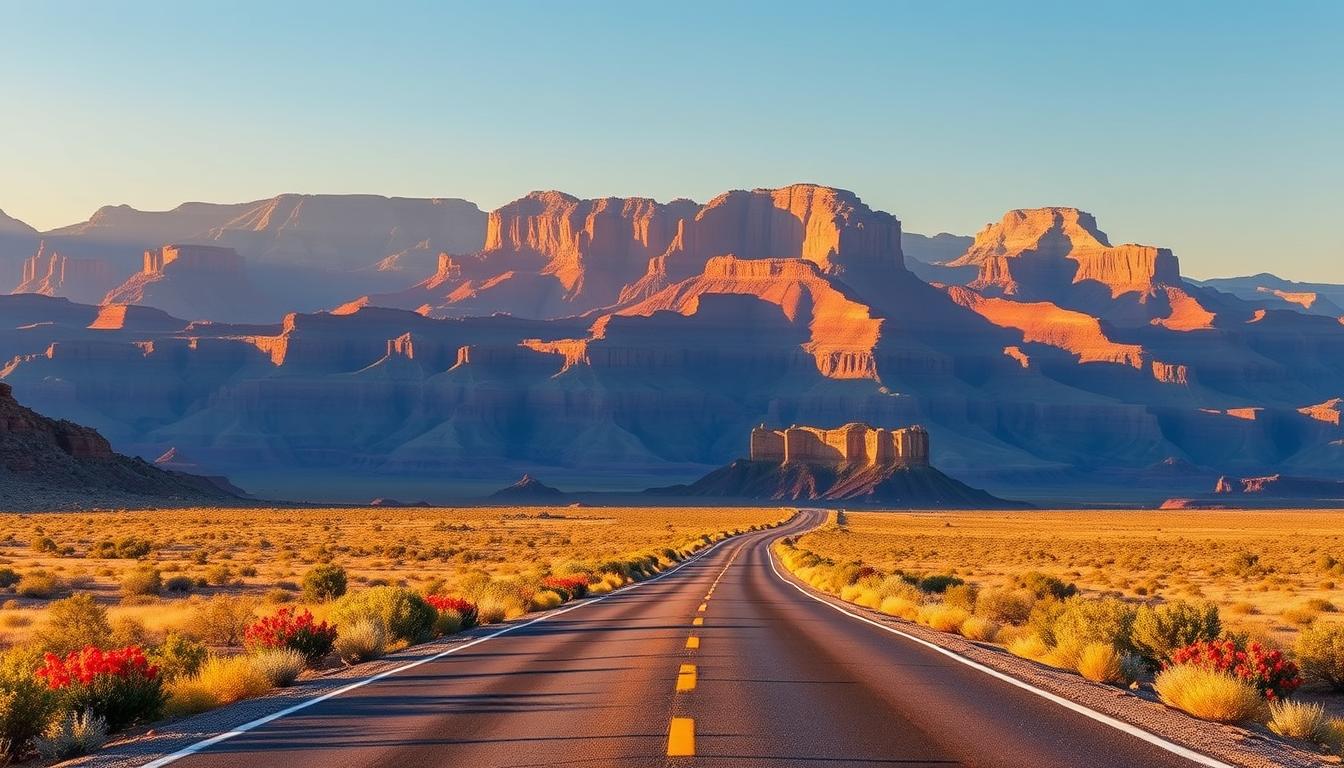
Did you know Arizona is huge, covering over 113,000 square miles? It has everything from hot deserts to snowy mountains. Planning a trip to Arizona means getting ready for these big changes to stay safe and have fun.
Looking for a quick trip or a long adventure? Your arizona road trip itinerary needs to think about long roads and weather. We’ll help you with park plans, getting your car ready, and finding great places to stay. By being ready for the desert’s challenges, you can enjoy Arizona’s stunning views and secret spots.
Key Takeaways
- Understand the dramatic elevation changes between desert lowlands and mountain forests.
- Select a route duration that balances major landmarks with necessary travel time.
- Prioritize vehicle maintenance and safety checks for remote highway driving.
- Secure advance reservations for popular national parks and protected areas.
- Prepare for extreme temperature fluctuations by packing versatile clothing layers.
How to Choose the Right Arizona Road Trip Length
Creating the perfect itinerary for arizona means balancing your time with the state’s many wonders. When planning a trip to arizona, pick your top spots to avoid too much driving.
What to See on a Three-Day Arizona Getaway
A three-day trip is great for exploring one area well. Focus on Phoenix, Sedona’s red rocks, and the Grand Canyon South Rim.
This is ideal for travelers who want a memorable trip without a long vacation. Keep your schedule tight to enjoy each place fully.
How a Five- to Seven-Day Itinerary for Arizona Fits More Highlights
Five to seven days lets you see more. You can visit Page, with its Horseshoe Bend and Antelope Canyon, or Monument Valley.
A week-long itinerary for arizona means more time for hikes and sunset photos. It’s less rushed than a three-day trip.
When to Plan a Ten- to Fourteen-Day Southwest Road Trip
A two-week trip is best for seeing the whole state. You can explore southern Arizona, like Saguaro National Park, or the historic Petrified Forest.
Long trips let you find hidden spots most miss. Check out a detailed Arizona road trip guide for more ideas.
Choosing Between a Phoenix Loop and a One-Way Route
Choosing your route is key when planning a trip to arizona. A Phoenix loop is often cheaper for car rentals.
But a one-way route saves time if you fly into Phoenix and out of another airport. Think about these points when deciding:
| Route Type | Primary Benefit | Main Drawback |
|---|---|---|
| Phoenix Loop | Lower rental costs | More driving time |
| One-Way Route | Efficient travel | Higher drop-off fees |
The Best Arizona Trip Itinerary for First-Time Visitors
A well-planned arizona trip itinerary turns a simple drive into an unforgettable journey. By starting in the south and moving to the north, you spend less time driving. This lets you enjoy more at each stop.
Start in Phoenix with Desert Scenery and Easy Airport Access
Start in Phoenix, the main entry point for most visitors. It’s easy to get a rental car and buy supplies here. Spend your first day getting used to the desert by visiting gardens or trying local food.
Explore Sedona’s Red Rocks, Scenic Drives, and Hiking Trails
As you move north, you’ll see Sedona’s famous red rocks. It’s great for short, rewarding hikes with amazing views. Spend at least a day to fully enjoy the beauty of the canyons.
Visit the Grand Canyon’s South Rim for the Classic Arizona View
Next, head to the Grand Canyon. Try to get to Mather Point before sunrise to avoid crowds. Enjoy the classic Arizona view by walking the Rim Trail at your own pace.
Add Page, Horseshoe Bend, and Antelope Canyon in Northern Arizona
From the canyon, go to Page to see the Colorado River’s wonders. Don’t miss Horseshoe Bend and Antelope Canyon. Book tours early to make your arizona travel itinerary smooth.
Finish with Monument Valley or Return Through Flagstaff
End your trip in Monument Valley for a deep dive into Navajo culture. Or, return through Flagstaff for a cooler experience and Route 66. For more planning tips, check out this comprehensive guide.
| Destination | Primary Highlight | Recommended Time |
|---|---|---|
| Phoenix | Desert Botanical Garden | 1 Day |
| Sedona | Red Rock State Park | 2 Days |
| Grand Canyon | South Rim Viewpoints | 2 Days |
| Page | Antelope Canyon | 1 Day |
| Flagstaff | Historic Downtown | 1 Day |
Arizona Road Trip Routes Worth Building Your Trip Around
Looking for red rock views or quiet desert spots? Your route choice makes all the difference. The right path means more time to explore and less driving. These arizona road trips showcase the state’s best views and offer a good pace for all.
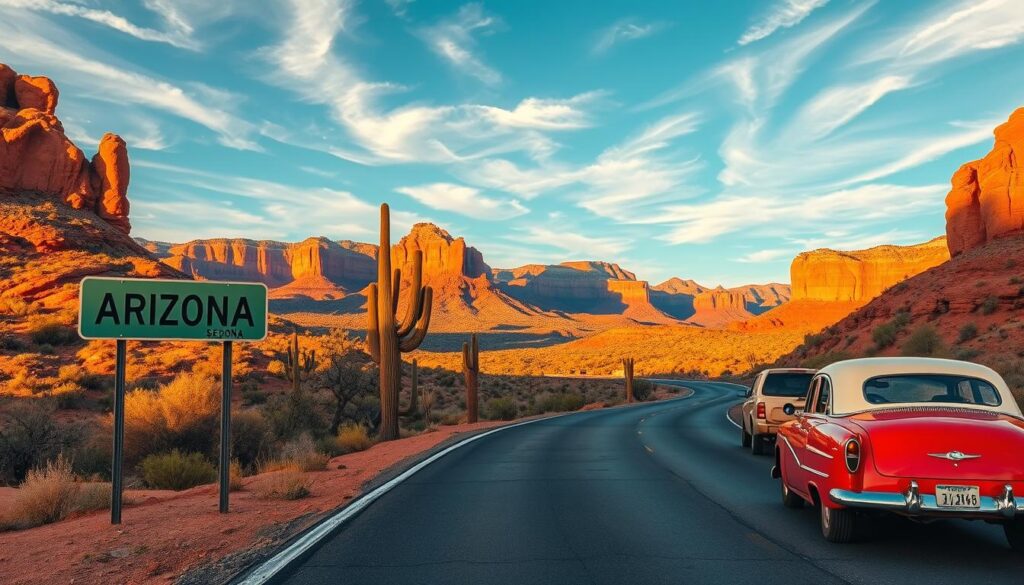
The Phoenix–Sedona–Grand Canyon Loop
Best stops, approximate driving times, and ideal trip length
This loop is perfect for first-timers. It takes you from desert to red rocks to the Grand Canyon. A four to five-day trip covers about eight hours of driving.
The Northern Arizona Scenic Route
Grand Canyon, Page, Monument Valley, and the Navajo Nation
Seeking stunning photos and cultural experiences? This route is unmatched. You’ll see Horseshoe Bend and Monument Valley. Plan for six days to fully enjoy these northern wonders.
“The journey of a thousand miles begins with a single step, but in Arizona, it begins with a well-planned map.”
The Southern Arizona Desert Route
Tucson, Saguaro National Park, Bisbee, and Chiricahua National Monument
This route dives into the Sonoran Desert’s unique life. You’ll visit Bisbee and Chiricahua’s volcanic rocks. It’s great for those who love mild winters and a calm pace.
The Ultimate Arizona National Parks and Public Lands Loop
How to combine Grand Canyon, Petrified Forest, and lesser-known landscapes
Got ten to fourteen days? This loop covers the whole state. It links the Grand Canyon with the Petrified Forest and Painted Desert. You’ll also find hidden spots in public lands.
| Route Name | Ideal Length | Key Highlights | Driving Demand |
|---|---|---|---|
| Phoenix Loop | 4-5 Days | Red Rocks, Canyon | Moderate |
| Northern Route | 6-7 Days | Navajo Nation, Page | High |
| Southern Route | 5-6 Days | Tucson, Bisbee | Low to Moderate |
Choose your route wisely for a safe trip. Always carry water, keep fuel full, and check your tires. Planning well lets you enjoy these arizona road trips without worry.
Must-See Stops for an Arizona Travel Itinerary
Creating the perfect arizona trip itinerary means mixing famous spots with secret desert spots. Grouping your stops by location saves travel time and boosts your experience at each place. Whether you seek winter escapes or summer fun, these places have something for everyone.
Phoenix and Scottsdale for Desert Gardens, Food, and Culture
Begin in the Valley of the Sun, where city life meets desert beauty. The Desert Botanical Garden introduces you to native plants. The local food scene showcases modern Southwestern tastes.
- Explore local museums and galleries for a day.
- Experience Scottsdale’s lively nightlife in Old Town.
- Visit in the cooler morning to avoid the heat.
Montezuma Castle and Verde Valley on the Drive to Sedona
On your way north, stop at Montezuma Castle National Monument to see ancient cliff dwellings. It’s a quick, educational break.
Nearby, Montezuma’s Well shows a natural limestone sinkhole. These spots are great for history and geology fans without needing to exert themselves.
Sedona’s Red Rock Country and Oak Creek Canyon
Sedona is known for its stunning sandstone formations and spiritual vibe. Choose a challenging hike or a scenic drive through Oak Creek Canyon for breathtaking views.
Pro tip: Visit during the shoulder seasons for the best weather. Spend at least two days to enjoy the trails and local shops.
Flagstaff, Sunset Crater, and Wupatki National Monument
Flagstaff is a high-altitude gateway to northern wonders. The volcanic landscapes of Sunset Crater Volcano and Wupatki’s ancient pueblos offer a unique contrast to Sedona’s red rocks.
Explore these sites as a loop from Flagstaff. They have short, paved walks and moderate trails for most energy levels.
Grand Canyon South Rim Viewpoints and Rim Trail Walks
No itinerary for arizona is complete without seeing the Grand Canyon. Mather Point has the most famous views. The Rim Trail offers easy walking with canyon views.
Plan to spend at least one day here. If you have more time, find quieter spots along the rim.
Page’s Horseshoe Bend, Lake Powell, and Antelope Canyon
Page is home to some of the most photographed landscapes in the American Southwest. Horseshoe Bend is an easy walk, while Antelope Canyon needs advance tour bookings.
Lake Powell offers a refreshing change with boat tours or kayaking. Book canyon tours early, as they fill up fast during peak months.
Petrified Forest National Park and Historic Route 66
Travel back in time at the Petrified Forest. The main road allows stops at overlooks and short trails.
Combine this with a drive through Winslow to see the famous corner mentioned in classic music. It’s a nostalgic way to experience the Mother Road’s history.
Monument Valley and the Scenic Drive Through Navajo Country
End your trip with Monument Valley’s iconic spires. Driving through this sacred Navajo land is awe-inspiring.
Key activities include:
- Take a guided tour to access restricted areas.
- Watch the sunrise over the Mittens.
- Respect local customs and photography guidelines.
How to Plan Each Day Without Spending It All Behind the Wheel
Focus on regional clusters to make your trip better. A good arizona road trip itinerary lets you explore more and drive less. This way, you get to see the Southwest’s unique landscapes without rushing.
Group Stops by Region Instead of Crossing the State Repeatedly
Start with geography to be efficient. Group your stops into clusters to cut down on long drives.
By focusing on one area, you avoid burnout. This way, your precious vacation time is spent enjoying the views, not driving the same roads over and over.
Use Realistic Driving Times for Mountain Roads and Scenic Detours
Mountain driving and delays are part of the trip. A 130-mile drive can take longer than expected due to winding roads and elevation.
Unexpected events like a flat tire or road closure are part of the adventure. Building in buffer time helps avoid schedule disruptions.
Balance Big Attractions with Short Hikes and Flexible Afternoons
Don’t fill every hour with big activities. Mix a major landmark with a short hike or a calm afternoon for a better pace.
This balance keeps your energy up. A relaxed schedule often leads to deeper connections with the places you visit.
Build Sunrise, Sunset, and Dark-Sky Stops into the Schedule
The desert looks different with the light. Arriving at Mather Point for sunrise is peaceful and memorable before the crowds.
Stargazing in dark-sky areas adds magic to your evenings. These moments are often the trip’s highlights. Check out this arizona road trip itinerary for more ideas.
Choose Strategic Overnight Bases in Phoenix, Sedona, Page, and Flagstaff
Choosing a few main bases reduces travel fatigue. Use Phoenix, Sedona, Page, and Flagstaff as your main stops for easy access to regional highlights.
These places offer great access to attractions and comfortable lodging. Strategic base selection makes your journey smooth and enjoyable.
Best Time to Take an Arizona Road Trip
Choosing the right season is key for a great arizona road trip. The state’s weather changes a lot, from deserts to mountains, in just a few hours.
Why Spring and Fall Offer the Most Comfortable Conditions
March to May and September to November are the best times to explore. The desert weather is nice for outdoor fun like hiking and taking photos.
Elevation matters in these seasons. Valleys are warm, but mountains are cool. This mix makes your trip comfortable, thanks to a great Arizona road trip plan.

What to Expect During a Hot Summer in Phoenix, Page, and the Desert
Summer in Phoenix and Page is very hot, over 100 degrees. Start early to avoid the sun.
Keep your car cool and carry lots of water. Desert shade is rare, so visit places in the cooler hours. Afternoon is best for indoor activities.
“The desert is a beautiful, unforgiving landscape that demands respect and preparation from every traveler who enters its borders.”
How Winter Snow Changes Plans Around the Grand Canyon and Flagstaff
Winter turns northern Arizona into a snowy wonderland. This can affect your travel plans. Cities like Flagstaff and the Grand Canyon’s South Rim get a lot of snow.
Be ready for road closures like on Highway 89A. Always check the weather and make sure your car is ready for winter if you visit in the cold months.
Planning Around Crowds, Holiday Weekends, and Park Reservations
Popular spots get crowded on holidays and school breaks. Book your stay and park tours early to avoid missing out.
- Spring Break: Expect high traffic in Sedona and Phoenix.
- Summer Holidays: National parks will be crowded; arrive at sunrise.
- Fall Weekends: Popular hiking trails fill up by mid-morning.
Checking Heat Advisories, Flash-Flood Risks, and Road Closures
Stay safe in the Southwest’s varied terrain. Check government sites for heat warnings and flash-flood alerts, mainly during the monsoon season.
| Season | Primary Concern | Best Region |
|---|---|---|
| Spring | Windy conditions | Central Desert |
| Summer | Extreme heat | High Country |
| Winter | Snow and ice | Southern Valleys |
Keep up with weather-related road closures. Being flexible and checking conditions daily makes your Arizona trip safe and memorable.
Practical Planning Tips for Driving Through Arizona
Planning a trip to Arizona means getting ready for the desert’s unique challenges. The views are stunning, but the vast distances and changing terrain need careful planning. Start early to avoid stress and enjoy the journey.
Renting the Right Vehicle for Long Distances and Unpaved Viewpoints
Choosing the right car is key for a safe trip. Look for a vehicle with dependable tires, enough ground clearance, and strong air conditioning. Make sure it’s okay to drive off-road if you plan to explore unpaved roads.
Check your rental car before you leave. Look at the tire pressure, make sure the spare is ready, and check the jack works. A portable tire gauge is a good idea, as service stations can be far apart.
Fueling Up Before Remote Stretches of Highway
Fuel stations are far apart in the desert. Always keep your tank more than half full when driving through rural areas. Proactive fueling saves you from worrying about finding a station when you’re low on gas.
Understanding National Park Passes, Entrance Fees, and Tour Reservations
Buying an “America the Beautiful” pass can save you money. It covers entrance fees for all National Park Service sites. Check which sites on your Arizona trip need special permits or timed-entry reservations.
Booking Antelope Canyon Tours and Other Time-Sensitive Activities
Places like Antelope Canyon need bookings because they’re so popular. Tours often sell out months in advance. Book your reservations early to avoid missing out.
Choosing Hotels, Cabins, Campgrounds, or Vacation Rentals
Arizona has many places to stay, from fancy resorts to cozy cabins. If you like camping, know the rules for public lands and national forests. Always check the weather, as flash floods can happen suddenly.
“Preparation is the best insurance policy for any traveler. When you plan for the unexpected, you gain the freedom to enjoy the journey.”
Preparing for Weak Cell Service, Limited Water, and Changing Elevation
Cell service can be weak in remote areas. Download maps and carry a physical atlas to stay on track. The elevation changes can also affect your car and how much water you need.
- Carry at least one gallon of water per person per day.
- Keep a portable power bank for your mobile devices.
- Pack extra snacks and a basic first-aid kit.
- Monitor local weather reports for heat advisories or road closures.
By following these tips, you can avoid common travel problems. Stay informed and prepared to enjoy Arizona’s beautiful views and rich culture.
What to Pack and How to Stay Safe on Arizona Roads
When you start your arizona road trip, being ready for different environments is key. The state has high-desert plateaus, deep canyons, and mountains. You might see snow in the morning and intense heat by afternoon. For a detailed guide on packing your travel documents and gear, check our ultimate international travel checklist for 2024.
Desert Road Trip Essentials for Heat, Sun, and Dry Air
The desert sun is much stronger than in other places. You’ll need high-SPF sunscreen and wide-brimmed hats. The air is very dry, so your body loses moisture quickly. Carry more water than you think you’ll need, in durable, reusable containers.
Hiking Gear for Red Rock Trails and Grand Canyon Viewpoints
Wear sturdy, broken-in shoes for Sedona’s red rocks or the Grand Canyon’s steep paths. Dress in breathable layers for temperature changes. Always have a basic first-aid kit, a flashlight, and a physical map, as cell service can be unreliable.
Driving Safely Around Wildlife, Dust, Snow, and Steep Grades
Arizona’s highways can quickly change from flat desert to winding mountain passes. Check your tires before you leave, as heat and sharp rocks can damage them. Be careful of wildlife crossing roads at dawn and dusk. Also, watch for sudden dust storms or snow near the Hualapai Mountains.
Protecting Yourself from Heat Exhaustion and Dehydration
Heat exhaustion is a big risk in warmer months. Symptoms include dizziness, nausea, and heavy sweating. If you feel these signs, find a cool, shaded area and drink electrolyte-rich fluids. Never underestimate the sun’s power, even on breezy days.
Respecting Tribal Lands, Leave No Trace Rules, and Local Communities
Most of the land you’ll travel through belongs to tribal nations. Always follow posted signs and stay on designated trails. Avoid disturbing cultural sites or artifacts. By following Leave No Trace principles, you help keep these beautiful landscapes for future travelers.
| Category | Essential Item | Purpose |
|---|---|---|
| Sun Protection | Wide-brimmed Hat | Prevents heatstroke |
| Hydration | Reusable Water Jug | Prevents dehydration |
| Vehicle Safety | Emergency Kit | Handles roadside issues |
| Navigation | Physical Map | Backs up GPS failure |
Conclusion
Your trip to Arizona needs careful planning and a sense of adventure. A good arizona trip itinerary mixes the lively culture of Phoenix with the peaceful beauty of the north. By organizing your stops by area, you save time and reduce driving stress.
Being flexible is key when traveling. Weather and road conditions can change fast in the desert. So, keep your plans open for small changes. Also, book tours for places like Antelope Canyon early to get a spot during busy times.
Always be careful of your surroundings. Carry enough water, check your fuel often, and respect the environment. A good arizona travel itinerary also considers elevation and temperature to keep you comfortable.
Enjoy the Sonoran Desert and Sedona’s red rocks to make unforgettable memories. Stick to your interests but also keep a realistic pace for driving. With good planning, your trip will be safe and full of rewards.